November 10, 2026·6 min read·By Learn My EV

Polestar Formula 2030 Concept Revealed: First Look at the Design of the 2027 Polestar 2 and Polestar 7

Polestar's Formula 2030 concept is a 184-inch, four-door electric sports car that previews the next Polestar 2 (2027) and Polestar 7 (2028), with Dual Blade lights, new taillights and physical buttons.

Polestar Formula 2030 Concept Revealed: First Look at the Design of the 2027 Polestar 2 and Polestar 7

Photo: Polestar

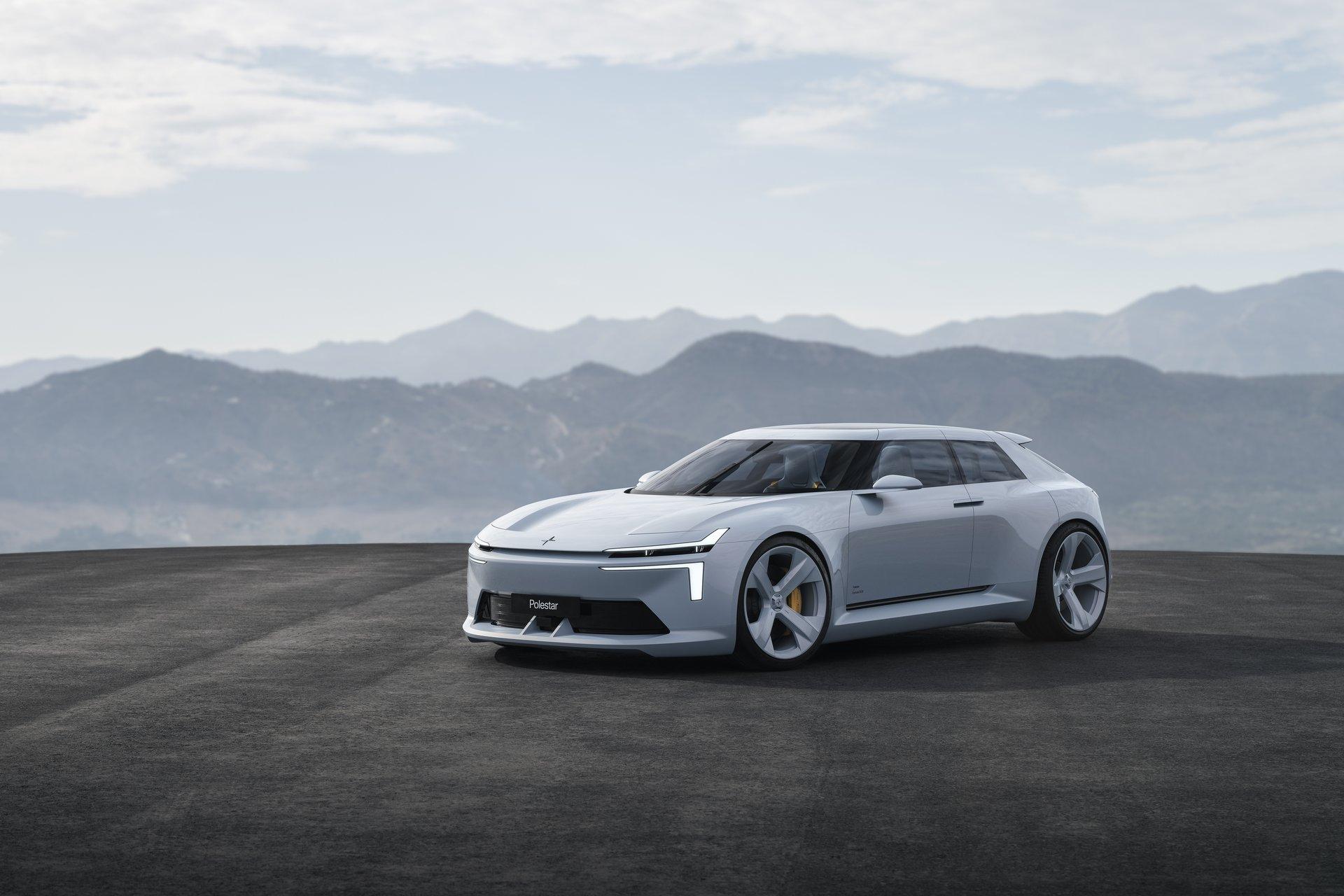
Polestar has shown the world what its next cars will look like, even if it won't build this one. The Swedish brand today officially revealed the Polestar Formula 2030 concept, a low, wide, four-door electric sports car that Polestar says previews design features of the next-generation Polestar 2 in 2027 and the Polestar 7 compact SUV that follows in 2028.

The name is confirmed: Formula 2030, the same name Polestar gave its company strategy. The car first appeared in a single teaser image on September 7, after a private showing for investors and retailers at Polestar's Gothenburg headquarters. Now the whole car is out, inside and out. Here's what it shows, what will reach production and why American buyers will mostly be watching from the sidelines.

184.3 in
Length (4,680 mm), about 3 inches longer than today's Polestar 2
53.1 in
Roof height (1,350 mm), lower than the Polestar 5
8
Customizable physical controls below the center screen
2027
Launch year of the next Polestar 2, the first car to borrow its design

What Is the Polestar Formula 2030 Concept?

Polestar calls Formula 2030 a "compact practical four-door sports car" and the "physical manifestation" of its Formula 2030 business strategy. It is the first show car designed under Philipp Römers, Polestar's head of design, who came to the brand from Audi.

"It is a physical embodiment of how we apply Polestar's core values of design, performance and sustainability to the next production cars."

— Philipp Römers, Head of Design, Polestar

Polestar has not released any powertrain, battery, range or performance figures. This is a design study, and the company has not said it will produce it. Its job is to show where Polestar's styling and cabin layout are headed.

Formula 2030 conceptSpecification
BodyFour-door, four-seat electric sports car
Length4,680 mm (184.3 in)
Width2,021 mm (79.6 in)
Height1,350 mm (53.1 in)
Wheelbase2,780 mm (109.4 in)
Wheels22-inch center-lock, four-spoke
Brakes and dampersBrembo calipers, Öhlins dampers
Screens20-inch curved driver display, 12.2-inch center screen
Powertrain, range, priceNot announced

Polestar says the concept sits between the coming Polestar 2 and Polestar 7 in size. By our math it is about 5 inches lower than the outgoing Polestar 2.

Exterior Design: What Carries Over to the Next Polestar 2

The design team kept the brand's best-known features and sharpened the rest. Römers described the goal back in September as "bold evolution not revolution of what came before."

  • Dual Blade headlights. Set into a front aero wing, they preview "the face of the next generation Polestar 2 planned for 2027," according to Polestar.
  • Single Blade taillights. The full-width rear light bar on today's Polestars is gone. Polestar says the new Single Blade rear lights are introduced "ahead of series production," a strong hint they're headed for showrooms.
  • Performance stance. A long hood, short overhangs, a cabin pushed rearward over wide rear haunches, a deep front splitter, a fixed rear wing and a rear diffuser.
  • Show-car touches. A single vertical windshield wiper, a wraparound windshield, rear-hinged rear doors with no center pillar and a lidar unit that hides under a shroud until the car is driving itself.

The paint is a new color called Nitrogen, applied tone-on-tone to the body, wheels, cladding, splitter and diffuser. Polestar's "Swedish Gold" shows up on the brake calipers, valve caps, seat belts and cabin trim.

"We wanted to evolve, while respecting, the core design values we demonstrated with previous models that define the Polestar brand in such a recognisable way."

— Nahum Escobedo, Head of Exterior Design, Polestar
Advertisement

Inside: Physical Buttons Are Back

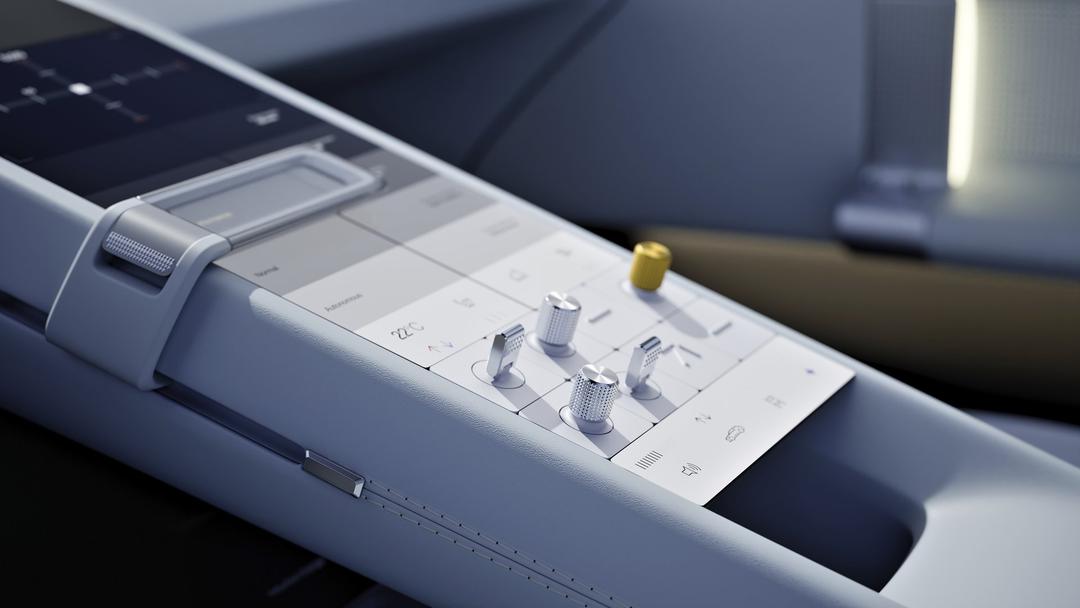
Polestar Formula 2030 concept interior showing customizable physical controls and rotary knobs below the center screen
Eight customizable physical controls sit below the center screen. Owners could choose rocker switches or rotary knobs. Photo: Polestar

The cabin may be the most important part of the concept for future buyers. Like several other automakers lately, Polestar is backing away from putting nearly every function on a touchscreen. The company says it is "committing to rebalance the mix of physical and digital."

  • Eight physical controls below the center screen handle the most-used functions. Each can be fitted as a rocker switch or a rotary knob and reprogrammed digitally.
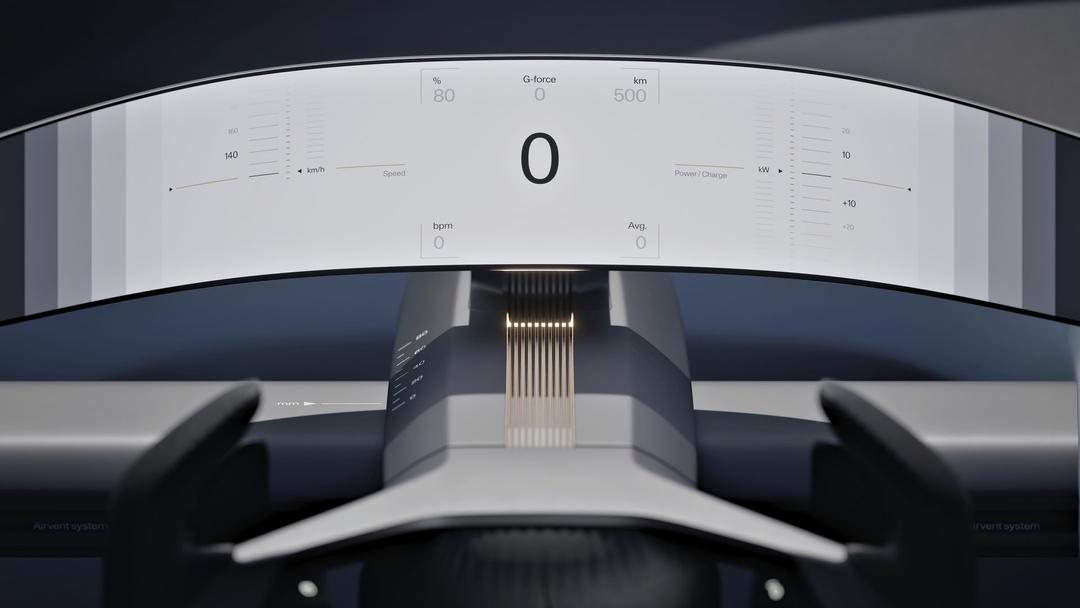
  • A 20-inch curved "HyperDIM" driver display is mounted to the steering column, so it moves with the wheel.
  • The 12.2-inch center screen rises from the center tunnel.
  • Three drive modes (Performance, Normal and Autonomous) physically rearrange the cockpit. In Performance mode the center screen sinks flush and the wheel pulls toward the driver. In Autonomous mode the screen stands up and the seat and wheel move apart.
  • Four seats with air-inflatable bolsters that adjust to each occupant.
  • Google Gemini AI voice assistant, as on Polestar's production cars.
Polestar Formula 2030 concept 20-inch curved HyperDIM driver display mounted on the steering column
The 20-inch curved driver display is mounted to the steering column. Photo: Polestar

"As a performance brand, we see a renewed focus on the driver, and so we re-balance the digital and physical."

— Juan Pablo Bernal, Head of Interior Design, Polestar

Polestar's sustainability story continues too. The seat backs use a composite of European flax and bio-based polypropylene. The seat frames and cross-car beam are exposed, low-emission galvanized steel. The door panels use a single recyclable material, and the cargo area shows off a natural-fiber composite from Swiss supplier Bcomp.

Advertisement

Which Production Cars Will Use the Formula 2030 Design?

Polestar says "various design attributes" from the concept are confirmed for two production cars:

  1. Next-generation Polestar 2 (2027). The all-new replacement for the original Polestar 2, which recently ended production. Polestar says the concept's headlights preview its face.
  2. Polestar 7 (2028). A compact SUV and Polestar's first car to be built in Europe. InsideEVs reports it will come from Volvo's plant in Košice, Slovakia, and use Volvo technology.

A Polestar 6 roadster is also still on the company's plan. The Formula 2030 made its debut during the media drive for the new Polestar 4 SUV, which Polestar says helped shape the concept's low-slung shape.

Will Americans Be Able to Buy These Cars?

Not under current rules. In June, the US Commerce Department declined to give Polestar an authorization under its Connected Vehicle Rule, which restricts automotive technology linked to China. Polestar is majority-owned by China's Geely. As a result, Polestar can't sell 2027 or newer model-year vehicles in the United States. That rules out both the next Polestar 2 and the Polestar 7.

What it means for US drivers
  • The cars this concept previews are aimed at Europe and Polestar's other markets, not the US.
  • Polestar says it will keep selling existing US inventory and support current owners.
  • For background on the end of the original Polestar 2 and the US sales ban, see our earlier coverage linked below.
Formula 2030 timeline
  • September 7, 2026: Polestar confirms the concept and releases a single teaser image
  • November 10, 2026: Full reveal of the Formula 2030 concept
  • 2027: All-new Polestar 2 launches with Formula 2030 design features
  • 2028: Polestar 7 compact SUV arrives, built in Europe

The bottom line: The Formula 2030 is a show car, but a useful one. It tells us the next Polestar 2 will keep the Dual Blade face, lose the full-width taillight bar and bring back real buttons inside. That's a sensible direction for a brand that needs its next two cars to sell well, especially in Europe. The hard part for American fans is that, unless US policy changes, they'll only see these cars in photos.

Related: Polestar 2 production ends after 200,000 cars · A dealer sues over Polestar's US exit · VW ID. Tiguan brings back physical buttons