2027 Mercedes EQS Drives 539 Miles on One Charge, Beating Its EPA Range by 72 Miles and the Lucid Air
The 2027 Mercedes-Benz EQS 450+ went 539 miles on a single charge in Edmunds' real-world range test, 72 miles past its EPA rating. How it was tested, what changed, charging speed, price, and how it stacks up against Lucid and Tesla.
Photo: Mercedes-Benz
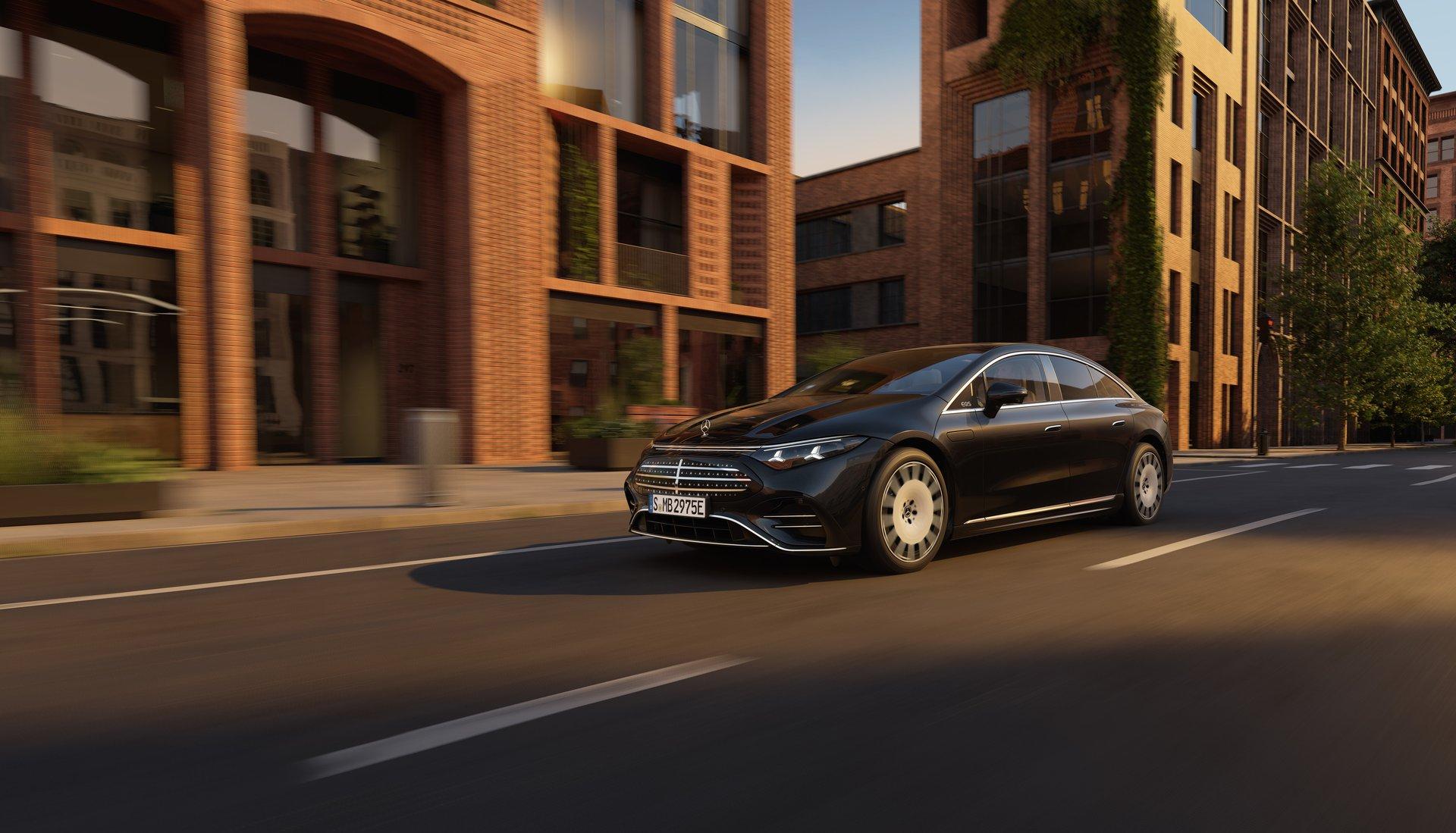
The 2027 Mercedes-Benz EQS 450+ has just covered 539 miles on a single charge in Edmunds' real-world range test. That is 72 miles more than its EPA estimate of 467 miles, and the longest distance any electric sedan has managed in the publication's testing, ahead of the Lucid Air.
It is also a big jump over the car it replaces. The 2025 EQS 450+ went 464 miles on the same kind of test. Mercedes did not just put a bigger battery in its flagship EV. It rebuilt the car's electrical system around 800 volts, new motors and a two-speed transmission, and the result shows up both on the road and at the charger.
539 mi
Edmunds real-world range on one charge
+72 mi
Beyond the 467-mile EPA estimate
122 kWh
Usable battery capacity
7:16
Minutes to add 100 miles at a fast charger
How Edmunds Tested the Mercedes EQS Range
This was not a factory stunt. Edmunds runs every EV it tests over the same predetermined route in Southern California, aiming for 60% city and 40% highway driving at an average speed of about 40 mph. Drivers stay close to posted limits, and the climate control is left on automatic at 72°F. The EQS ran in Eco mode with regenerative braking set to high.
Those conditions are kinder than a winter interstate run at 75 mph, so don't expect 539 miles on a cold January road trip. But because every car gets the same treatment, the results are useful for comparing one EV with another. Edmunds hasn't published the ambient temperature for this run.
2027 Mercedes-Benz EQS 450+ at a glance
Battery: 122 kWh usable, up from 118 kWh, in the same physical space
Edmunds tested range: 539 miles (EPA estimate: 467 miles)
Edmunds measured efficiency: 26.9 kWh per 100 miles (EPA: 28)
Charging: 800-volt system, up to 350 kW DC fast charging
Price: $103,000 including destination; test car $121,615 (per Edmunds)
What Changed to Make the New EQS Go So Far
According to Mercedes, the battery now uses cells whose anodes blend silicon oxide with graphite. That lets the pack store about 3% more energy in the same footprint, 122 kWh instead of 118 kWh, while using less cobalt than before.
The bigger gains come from efficiency. The new in-house electric motors are more compact and efficient, and the rear motor drives through a two-speed transmission: first gear for brisk launches, a long second gear for relaxed highway cruising. Mercedes also raised maximum regenerative braking to 385 kW, a third more than before, so more energy goes back into the battery when the car slows. Mercedes quotes a drag coefficient as low as 0.20 for one EQS 450+ configuration.
In Europe, Mercedes rates the EQS 450+ at 926 km (575 miles) on the WLTP cycle, 13% more than its predecessor. As usual, the EPA figure is lower. The rest of the 2027 lineup is now on the government's fueleconomy.gov site: the EQS 500 4Matic is rated at 443 miles and the EQS 580 4Matic at 434 miles.
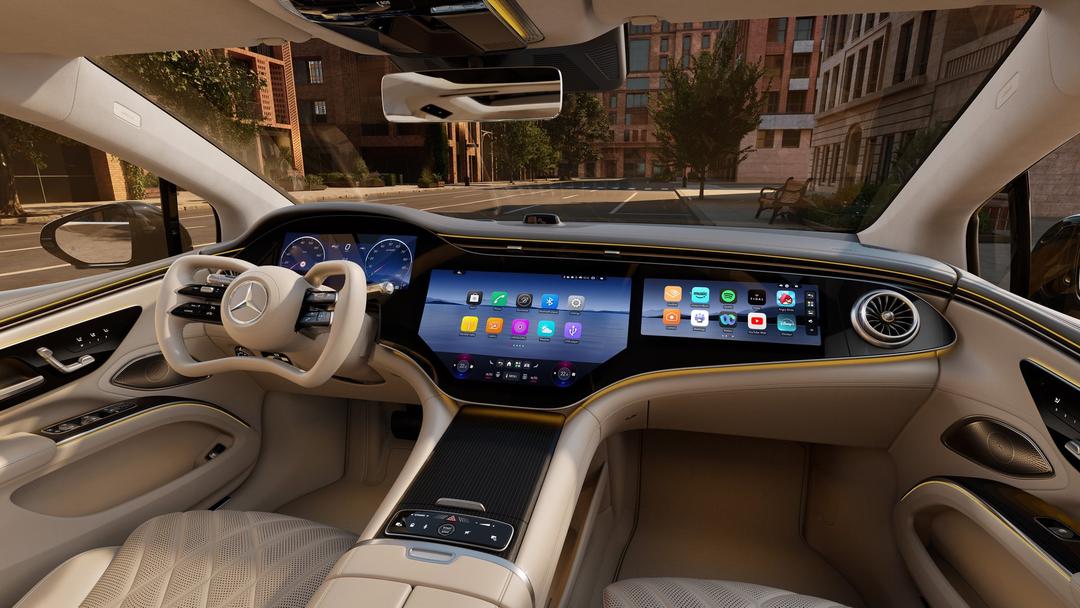
The updated EQS cabin with the optional yoke wheel, which pairs with steer-by-wire arriving a few months after launch. Photo: Mercedes-Benz
Advertisement
Charging Speed: Nearly Twice as Fast as the Old EQS
Range is only half of a road trip. On Edmunds' charging test, the new EQS hit its full 350 kW peak and averaged 222 kW. It added 100 miles of range in 7 minutes, 16 seconds, compared with 13 minutes, 44 seconds for the 2025 model, which peaked at 208 kW.
At older 400-volt chargers, which are still common in the US, Mercedes says the battery splits itself into two halves and charges each at up to 175 kW. Plug & Charge is supported at participating networks.
Advertisement
How the EQS Compares With the Lucid Air and Tesla Model S
On Edmunds' leaderboard, only the much larger Cadillac Escalade IQ has gone farther, with a 205 kWh battery. The Chevrolet Silverado EV WT pickup matched the EQS at 539 miles. Among sedans, the EQS is now at the top.
Vehicle
Edmunds tested range
EPA range
2025 Cadillac Escalade IQ
558 miles
465 miles
2027 Mercedes-Benz EQS 450+
539 miles
467 miles
2025 Chevrolet Silverado EV WT
539 miles
492 miles
2022 Lucid Air Dream Range
505 miles
520 miles
2022 Lucid Air Grand Touring
465 miles
516 miles
2025 Mercedes-Benz EQS 450+
464 miles
390 miles
2021 Tesla Model S Plaid
345 miles
348 miles
Two caveats. Edmunds' Lucid results come from 2022 cars, and today's Lucid Air Grand Touring carries a higher EPA rating of 512 miles, while the current Tesla Model S is rated at 410 miles. Edmunds' leaderboard doesn't yet include a current-generation Air, so a newer car could close the gap.
The EQS result is also not a world record. In July 2025, a Lucid Air Grand Touring driven by entrepreneur Umit Sabanci set a Guinness World Record by covering 1,205 km (749 miles) from St. Moritz, Switzerland, to Munich. In October, BMW said a China-market Neue Klasse i3 covered 754 miles in its own road test. Both were special long-distance drives. Edmunds' figure comes from a standardized loop, which is what makes it useful to buyers.
Mercedes' US Fast-Charging Network Hits 100 Locations
The timing works for Mercedes in another way. Its own charging network, Mercedes-Benz High-Power Charging, marked three years in North America this month with 100 locations across 28 US states and British Columbia, according to InsideEVs. That adds up to nearly 1,000 charging ports.
What to know before you plug in
Chargers deliver up to 400 kW, more than the EQS can take
Most stalls have both CCS and Tesla-style NACS connectors; about 3% of sites are CCS only
Prices run $0.35 to $0.60 per kWh depending on location
Card readers place a $25 hold that is released after you're billed for the energy used
First-try session success has risen from about 84% in 2023 to more than 90%
The network is small next to Tesla's Supercharger network, and sites tend to sit near upscale shopping centers rather than along every interstate. But for an EQS owner who can drive 400-plus miles between stops, it means fewer charging stops and, when one is needed, a fairly short one.
The bottom line: The 2027 Mercedes-Benz EQS 450+ went 539 miles on one charge in Edmunds' standardized test, beating its EPA rating by 72 miles and every other sedan Edmunds has tested. Add charging that is nearly twice as fast as before, and the EQS now makes a strong case as a long-distance cruiser. The catch is the price: at $103,000 to start, this kind of range still costs luxury money.