November 14, 2026·6 min read·By Learn My EV

VW ID. Buzz Robotaxi Gets a Second Operator: May Mobility Plans 10,000 Driverless Vans by 2031, US Testing in Early 2027

May Mobility plans to deploy 10,000+ autonomous VW ID. Buzz robotaxis through 2031, with US testing in early 2027. Here's how it compares with VW's own Mobileye-based ID. Buzz AD and the Uber LA plan.

VW ID. Buzz Robotaxi Gets a Second Operator: May Mobility Plans 10,000 Driverless Vans by 2031, US Testing in Early 2027

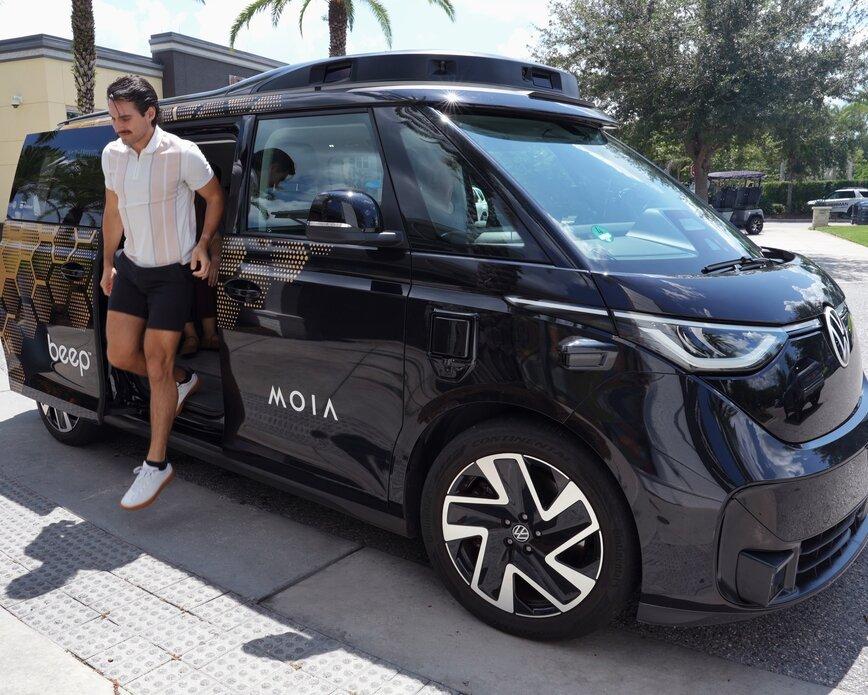
Photo: Volkswagen Group / MOIA

The Volkswagen ID. Buzz is picking up a second robotaxi career. On November 12, Ann Arbor, Michigan-based May Mobility said it plans to put its own self-driving system into the electric van and deploy more than 10,000 autonomous ID. Buzz vehicles through 2031, with on-road testing in the US starting in early 2027 and the first production vans delivered in 2028.

That is separate from Volkswagen's in-house effort. VW's MOIA unit is already testing its own ID. Buzz AD, built with Mobileye's self-driving system, on Los Angeles streets with Uber. So the same boxy EV is now headed for robotaxi duty under two different "brains," run by two different companies.

10,000+
Autonomous ID. Buzz vans May Mobility plans to deploy through 2031
Early 2027
Start of US on-road testing for May's ID. Buzz
2028
First production vehicles delivered
50%+
Cost savings May targets vs. its current robotaxi

What May Mobility Announced

According to May Mobility's press release, the ID. Buzz will be adapted to the requirements of May's autonomous driving kit. Two partners are involved:

  • ECARX will integrate May's autonomous driving system into what the release calls an "AV-ready" ID. Buzz.
  • Charlton Intelligence.ai is joining to help deploy the vehicles.

The vans will be run by fleet operator partners rather than sold to the public. May uses a partner-first model: today it runs rides through Lyft and plans service with Uber. InsideEVs notes that ride-hailing companies like these could be first in line for the new vans.

May picked the ID. Buzz for its multiple doors and roomy interior. The company says it is targeting cost savings of 50% or more compared with its current-generation vehicle, a Toyota Sienna minivan. That is a target, not a result.

What Is Still Unknown

Plenty. The release names no cities for the ID. Buzz fleet, no fleet operator customers and no price. It does not say whether riders will be carried with or without a safety driver at launch. May says vehicle specifications, testing and deployment details will come later.

Volkswagen is not quoted in the release, and the announcement does not describe a formal supply agreement beyond saying the ID. Buzz was selected. Autonext and EVXL both report that VW has not confirmed the 10,000-vehicle figure.

Reality check

May Mobility is a small company making a big promise. It reported about $10 million in revenue last year and roughly $93 million in cash burn, according to TechCrunch. It is going public through a pending SPAC merger with ACP Holdings at a $1.4 billion valuation, and part of that money is meant to pay for removing safety drivers. Today it runs Toyota Siennas in a handful of US locations, and only three of its deployments have operated without a driver aboard.

Advertisement

Who Is May Mobility?

May says it has completed more than 600,000 commercial autonomous rides covering 1.1 million miles in the US and Japan, including three "driver-out" deployments. Its current operations, per the release:

  • Atlanta: commercial service with Lyft
  • Eden Prairie and Grand Rapids, Minnesota: commercial service
  • Arlington, Texas: commercial service with Uber planned for 2027
  • Nagoya, Japan: a six-month pilot with NTT Mobility that began in September
"Scaling autonomous ride-hail depends heavily on the vehicle platform, and the Volkswagen ID. Buzz gives us one well suited for it." — Dr. Edwin Olson, CEO, May Mobility

VW's Own ID. Buzz AD: Mobileye Hardware and the Uber LA Plan

Volkswagen's in-house robotaxi is the ID. Buzz AD, shown in production form in June 2025. It uses Mobileye's self-driving system with 27 sensors: 13 cameras, nine lidars and five radars, according to Electrek. VW says it is built to meet SAE Level 4 requirements, including remote supervision. MOIA sells it as a turnkey package, with the van, the self-driving system and its own fleet software.

MOIA VW ID. Buzz AD autonomous van picking up riders with Beep in Lake Nona, Florida
MOIA America's ID. Buzz AD began carrying invited riders with Beep in Lake Nona, Florida, in September, with trained operators on board. Photo: MOIA

Here is where the VW-Uber plan stands in the US:

MilestoneStatus
VW and Uber partnershipAnnounced April 2025: thousands of ID. Buzz AD vans across multiple US markets over the next decade, starting in Los Angeles
Los Angeles testingBegan April 2026 with human operators on board
Test fleetMOIA plans to grow to more than 100 vans during testing
Rides on Uber in LAPlanned for late 2026
Lake Nona, FloridaInvited riders since September 2026 with Beep, operators on board
Other US testingLos Angeles, Austin and Orlando

Sources: Volkswagen Group, MOIA, Uber

VW and Uber have said human operators will ride along during the initial testing and launch phases, subject to regulatory approval. Neither has given a date for fully driverless rides in LA. In Germany, MOIA began a passenger pilot in Hamburg in July, also with safety operators.

Advertisement

How It Compares With Waymo, Zoox and Tesla

Both ID. Buzz programs are years behind the leaders in the US.

  • Waymo already runs public driverless service in cities including Los Angeles, the San Francisco Bay Area, Phoenix, Austin, Atlanta and Las Vegas, and it opened San Antonio, San Diego and Tampa in October. Its latest safety update covered roughly 270 million autonomous miles.
  • Zoox, owned by Amazon, began charging for rides in its purpose-built vehicle with no steering wheel in Las Vegas on August 10.
  • Tesla runs its Robotaxi service in several Texas and Florida cities with Model Ys and has opened orders for the Cybercab.

Neither ID. Buzz robotaxi carries public riders without a human on board yet. May's version will not even begin US road testing until early 2027.

What It Means for US Riders and Buyers

If you ride with Uber or Lyft, the ID. Buzz is the robotaxi you are most likely to see. MOIA's vans are tied to Uber in Los Angeles, and May works with both Lyft and Uber.

If you want to buy a regular ID. Buzz, the news does not help. Volkswagen skipped the 2026 model year in the US and has pushed the retail van's return to the 2028 model year, according to Electrive. For now, the van's US future looks more like fleet duty than driveways.

The bottom line: May Mobility's 10,000-van plan gives the VW ID. Buzz a second robotaxi path alongside VW's own Mobileye-based ID. Buzz AD. But no cities, customers or driverless dates are set, Volkswagen has not confirmed the number, and US testing starts only in early 2027. The nearer-term milestone to watch is MOIA's promised late-2026 launch of ID. Buzz rides on Uber in Los Angeles.

Related: Waymo and Uber end Austin and Atlanta partnership · Zoox starts charging for robotaxi rides · Nevada approves up to 8,000 robotaxis