How Much Does It Cost to Charge an Electric Car? Home vs. Public vs. Gas (2026)
Charging an EV at home costs about 6 cents a mile on average, less than half the cost of gas. Here's the math for home, public charging and every budget.
Tesla's new Robotaxi safety page shows 3.1M driverless miles with zero injuries, plus miles by city. The numbers, the human comparison and the fine print.

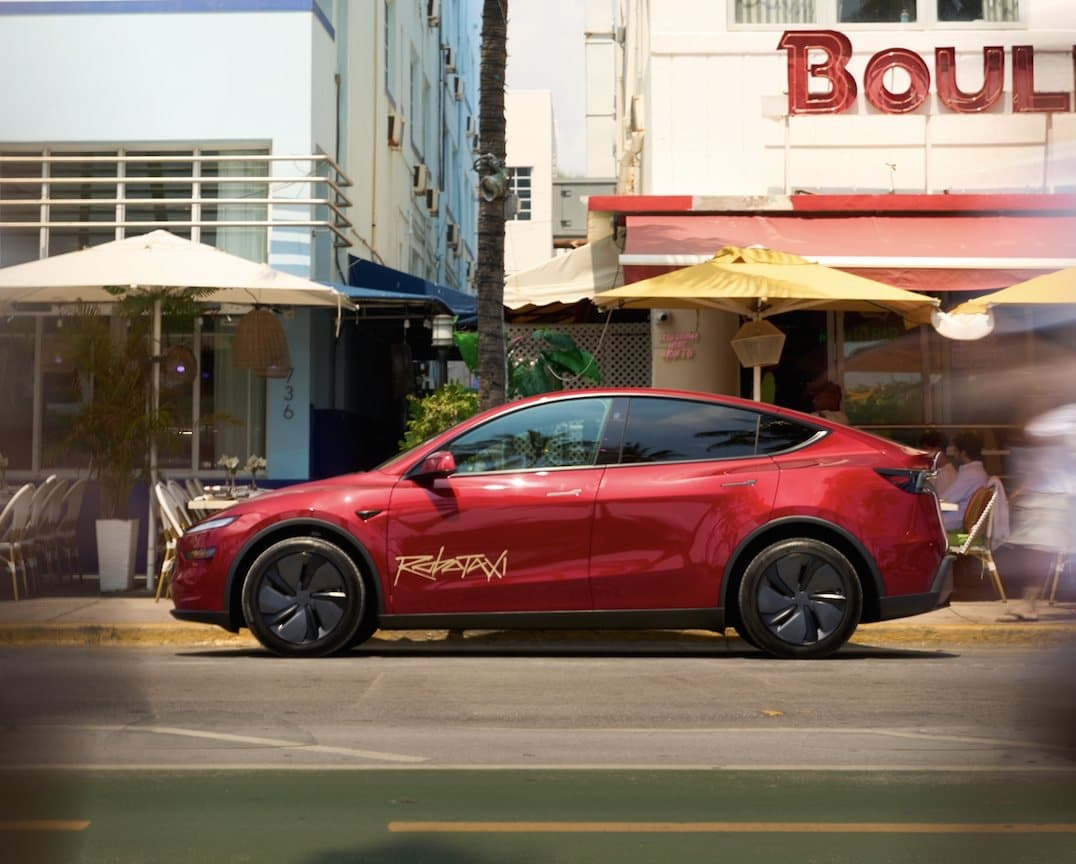
Photo: Tesla
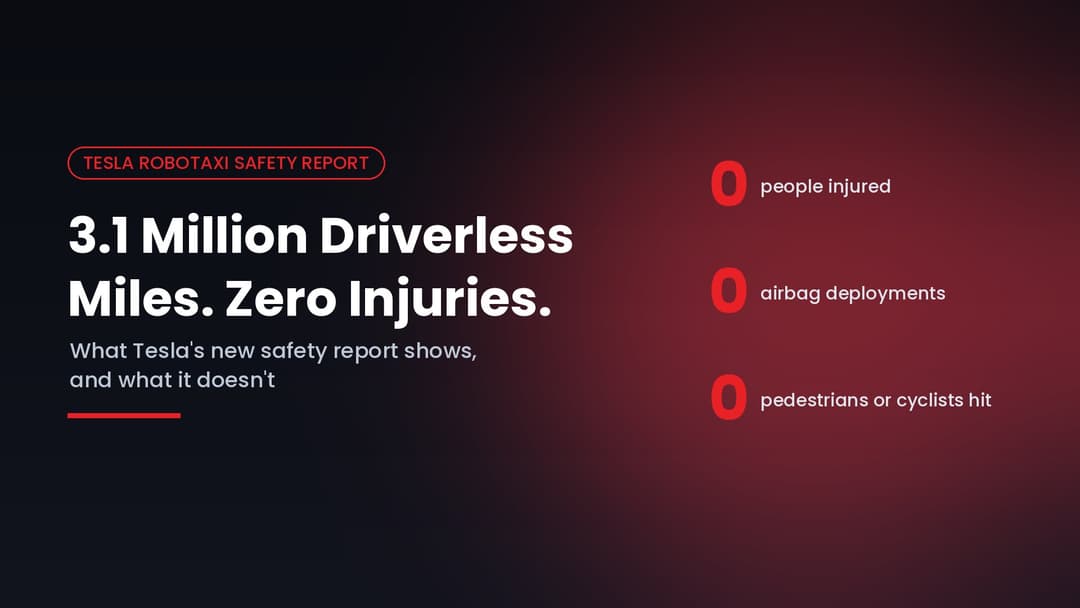
Tesla just published something it has never shown before: a dedicated Robotaxi safety report, with a live counter of driverless miles and a city-by-city breakdown. The headline numbers: more than 3.1 million miles driven with no one in the driver's seat, and, by Tesla's count, zero people injured, zero airbag deployments and zero pedestrians or cyclists hit. Here's everything on the new page, how Tesla counts it, and what to keep in mind when reading it.

Tesla's fleet is driving autonomously, with no safety monitor in the car, in six cities across Texas and Florida. Austin, where the service launched, still makes up most of the miles, but Dallas has quickly become the second-largest market.
| City | Driverless miles | Share |
|---|---|---|
| Austin, TX | 2,118,015 | 68% |
| Dallas, TX | 608,130 | 20% |
| Houston, TX | 225,964 | 7% |
| Orlando, FL | 61,053 | 2% |
| Tampa, FL | 53,117 | 2% |
| Miami, FL | 46,262 | 1% |
| Total | ~3.11 million |
Tesla also lists four cities as coming soon: Las Vegas, Jacksonville, Phoenix and San Antonio. (See our earlier coverage of the Miami launch, Tampa and Orlando, and Nevada's robotaxi approval.)
One common criticism of robotaxis is that they only drive in easy conditions. Tesla's page breaks out tougher driving:
Tesla compares its record with Texas police crash data from Austin, Dallas and Houston, where Robotaxi drove 2.95 million miles, 95% of its total. Based on 2024 crash records, Tesla calculates that human drivers covering the same miles on the same cities' surface streets would have had about:
| Outcome | Robotaxi | Human drivers, same miles |
|---|---|---|
| Collisions with injuries | 0 | ~9.1 |
| Collisions with airbag deployment | 0 | ~4.1 |
| Collisions with pedestrians or cyclists | 0 | ~0.52 |
Tesla's human benchmark also adds the estimated 32% of injury crashes that are never reported to police, based on a 2023 NHTSA study. If those numbers hold up, going nearly 3 million miles without a single injury collision, when about nine would be expected, is a strong result.
To Tesla's credit, the methodology is unusually detailed. It's also important to understand exactly what the numbers do and don't count:
Safety data has been the biggest open question for Tesla's camera-only approach to self-driving, and it's what regulators, riders and investors watch most closely. Waymo has published detailed safety comparisons for years. Tesla now has its own public, regularly updated report built on NHTSA's crash filings, with a methodology anyone can read. As Robotaxi expands to Las Vegas, Phoenix, San Antonio and Jacksonville, this page will be where the real track record shows up, for better or worse.
For riders in Dallas, which has already logged more than 600,000 driverless miles, the numbers suggest the service is getting serious real-world use well beyond Austin.
How many miles has Tesla Robotaxi driven?
More than 3.1 million driverless miles from January 22 to October 18, 2026, and over 3.3 million on Tesla's live counter as of October 21.
Has a Tesla Robotaxi injured anyone?
Tesla's report shows zero people injured in collisions where the Robotaxi made first contact, zero Robotaxi airbag deployments and zero pedestrians or cyclists hit.
Which cities have Tesla Robotaxi?
Austin, Dallas and Houston in Texas, and Miami, Orlando and Tampa in Florida. Las Vegas, Jacksonville, Phoenix and San Antonio are listed as coming soon.
Where can I see Tesla's Robotaxi safety report?
At tesla.com/robotaxi/safety, which includes the full methodology and NHTSA crash filings.
The bottom line: Tesla's new safety page is its most detailed public look yet at how its driverless fleet performs: 3.1 million miles, zero injuries by its count, and a clear explanation of how it calculates that. The counting rules favor Robotaxi in some ways, and it's Tesla grading its own work, but the underlying crash reports are public. Watch how these numbers hold up as the fleet grows.

Charging an EV at home costs about 6 cents a mile on average, less than half the cost of gas. Here's the math for home, public charging and every budget.

What Level 1, Level 2 and DC fast charging mean, how fast each one charges, and what it really costs to install a Level 2 charger at home.

The average EV keeps about 95% of its range after five years, and replacements are rare. Battery life, warranties and how to make yours last.