Tesla Starts Work on $10.1 Billion 'Project Crystal Sun' Solar Factory in Texas: 9,712 Jobs, Production by 2029
Tesla has begun earthwork on Project Crystal Sun, a $10.1 billion solar panel factory on 3,057 acres in Fort Bend County, Texas, that would make wafers, cells and modules and employ 9,712. Here's what filings show.
Bulldozers are moving dirt on a 3,000-acre tract of farmland southwest of Houston, and the paperwork behind them says it could become one of the biggest solar factories ever proposed in the United States. Tesla's Project Crystal Sun, a planned $10.1 billion plant in Fort Bend County, Texas, would turn raw polysilicon into finished solar panels under one roof and employ nearly 9,700 people.
Drone footage shot over the weekend of November 8–9 by local pilot S.E. Robinson Jr., first reported by Teslarati and Drive Tesla, shows cleared land, leveled pads and equipment staging areas at the site. Elon Musk replied to the post. Tesla has not made a formal groundbreaking announcement, and its own filings stress that no final site decision has been made. But after months of tax votes, the project has moved from paper to earthwork.
$10.1B
Planned investment, mostly equipment
9,712
Permanent jobs promised
3,057
Acres near Needville, Fort Bend County
Q1 2029
Target start of commercial production
What Is Tesla's Project Crystal Sun?
Crystal Sun is Tesla's code name for a vertically integrated solar manufacturing campus. According to the application Tesla filed with the Texas Comptroller under the state's Jobs, Energy, Technology and Innovation (JETI) Act, the plant would handle nearly every step of making a solar panel: growing silicon ingots, slicing them into wafers, coating and printing them into solar cells, testing the cells, and assembling finished modules.
That matters because the U.S. solar supply chain is lopsided. The country can assemble about 65 gigawatts (GW) of solar modules a year but makes only about 3.2 GW of the cells that go inside them, according to Solar Energy Industries Association figures cited by Reuters in February. Most cells are imported, and China dominates their production.
Project Crystal Sun
Details from public filings
Location
FM 1994 and FM 762, near Needville and Richmond, Fort Bend County, Texas
Site size
About 3,057 acres across five parcels (Lamar CISD)
Total investment
About $10.1 billion: $1.52 billion in real property, $8.6 billion in equipment
Products
Silicon ingots, wafers, solar cells and finished modules
Permanent jobs
9,712, averaging $55 an hour, per the county agreement
Construction jobs
More than 1,100 at peak
Construction
2026 through 2028
Commercial production
First quarter of 2029
Annual capacity
Not disclosed
How Big Is a $10 Billion Solar Factory?
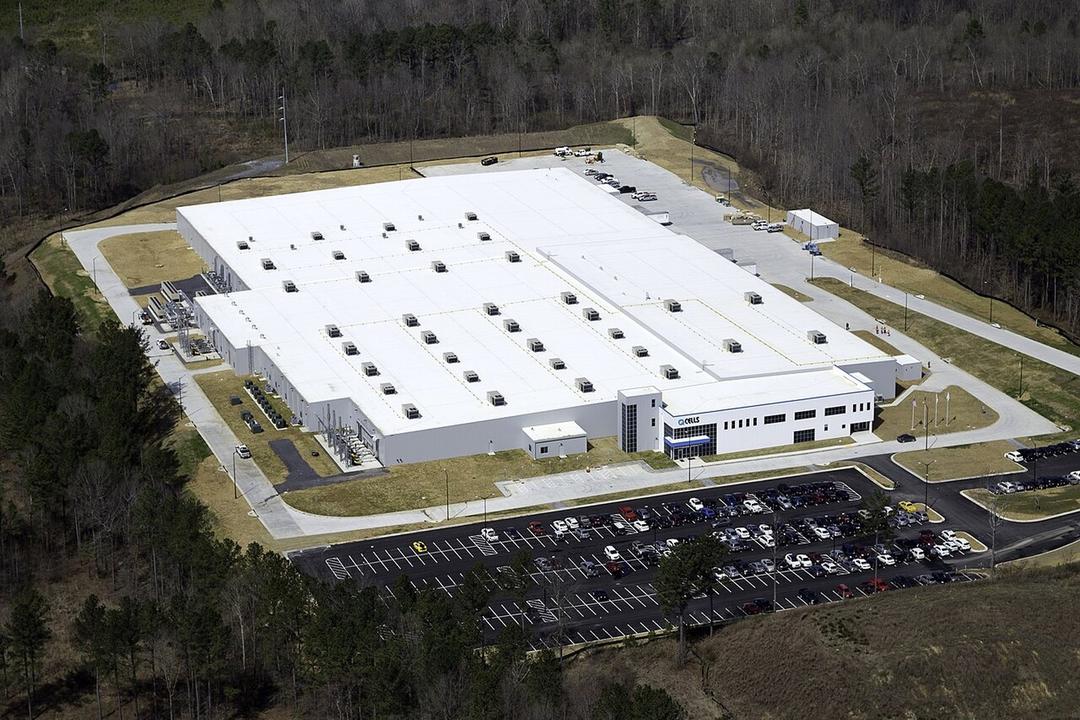
None of the public documents give the plant's output in gigawatts, so its size has to be judged by the money. For comparison, Qcells, one of the biggest solar manufacturers in the U.S., is spending about $2.5 billion on its Cartersville, Georgia, campus, which includes a 3.5 GW cell line. Crystal Sun's budget is roughly four times that.
The jobs figure is just as large. Under its agreement with Fort Bend County, Tesla's headcount is scheduled to ramp from 2,500 to 5,000, then 7,500, and reach 9,712 by the fourth year. Tesla's consultant, Kroll, estimates the plant would add about $107 billion to the Texas economy and $6.4 billion in state and local taxes over 38 years.
Qcells' module plant in Dalton, Georgia. The company's separate $2.5 billion Cartersville campus is about a quarter of Crystal Sun's planned budget. Photo: Q CELLS / Wikimedia Commons (CC BY-SA 4.0)
Advertisement
The Tax Breaks: Up to 35 Years of Incentives
Texas made Tesla work through two layers of local government before any dirt moved.
July 22: Tesla signs its JETI application. The Comptroller posts it publicly on August 6 and issues its recommendation on August 31.
September: Lamar Consolidated ISD trustees unanimously approve a 10-year limit on school property taxes for the project. The JETI agreement still needs final state sign-off.
October 22: Fort Bend County commissioners approve four incentive agreements 4–0. Interim County Judge Daniel Wong abstained because his engineering firm has worked with Tesla.
The county package, as detailed by Electrek from the agreements, works like this:
Years 1–10: a 100% abatement of county property taxes on equipment and other business property. The clock starts in 2029 by default, but Tesla can push it as late as 2031.
Years 11–30: Tesla pays county taxes on its equipment, and the county returns 90% as an annual grant.
Bonus: if Tesla averages at least 12,000 employees for two straight years in the first decade, the grant period stretches to 25 years, reaching project year 35.
Foreign trade zone: the site joins Port Freeport's Foreign-Trade Zone No. 149, which exempts eligible inventory from local property tax.
Floor: a "true-up" agreement guarantees the county at least $2 million a year. Land and buildings stay fully taxable.
"I am thrilled that the package we put together will not result in a property tax loss for our general fund."
Fort Bend County Commissioner Dexter McCoy, in an October 22 county news release
The strings attached
Tesla must start construction by June 30, 2027, begin commercial cell production by December 31, 2030, and invest $10 billion by the end of 2031 or two years after production starts, whichever is later.
Full benefits require hitting at least 90% of the jobs target, about 8,741 workers.
Missing the investment or construction deadlines, or abandoning the plant for 12 months, triggers repayment of abated taxes plus a possible 15% penalty.
Tesla made clear it had other options. Its JETI application says Fort Bend's economics are "not competitive" with an unnamed site in another state, which is redacted in a confidential filing. In the application, Kroll wrote that without an incentive agreement, "Tesla would be forced to further evaluate this potential investment outside of the state of Texas."
Advertisement
Why Is Tesla Building Solar Panels Again?
Crystal Sun is the biggest piece so far of a goal Musk set out in January at the World Economic Forum in Davos, where he said Tesla and SpaceX are working toward 100 GW a year of U.S.-made solar. A Tesla job posting reported by Reuters put a date on it: to "deploy 100GW of solar manufacturing from raw materials on American soil before the end of 2028." Musk argues that solar paired with batteries is the fastest way to add power as AI data centers drive up electricity demand.
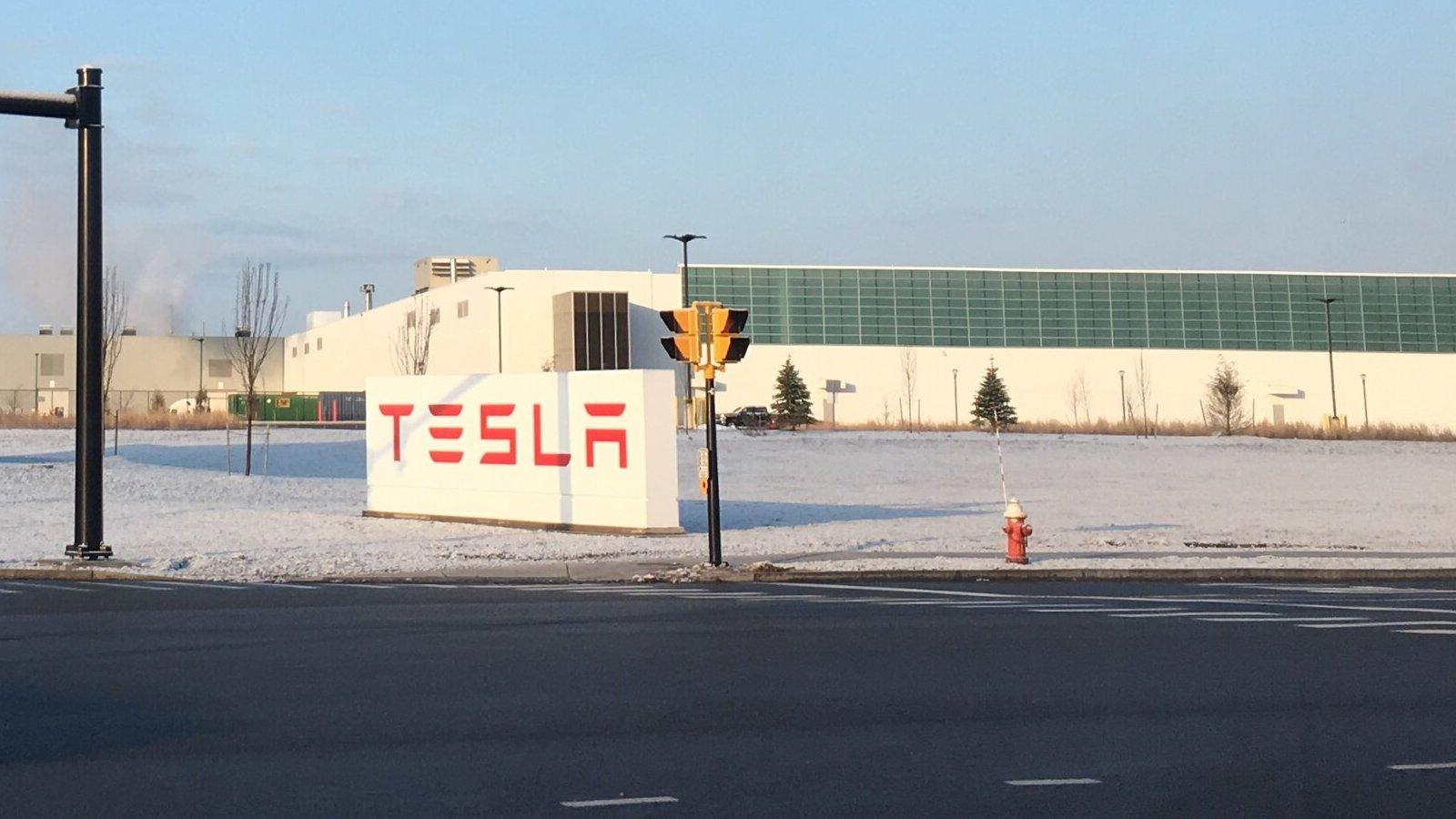
Tesla already sells its own panels. In January it launched the TSP-420, a 415- to 420-watt module assembled at its Buffalo, New York, factory, though the cells inside appear to come from overseas, according to Electrek. Crystal Sun would move cell and wafer production onshore. Tesla's filing also cites federal manufacturing tax credits, including the Section 45X advanced manufacturing production credit, which rewards companies for each solar component they make in the U.S.
Tesla's solar track record
Tesla inherited the Buffalo plant in its 2016 SolarCity acquisition. New York State spent about $950 million on it.
When solar plans fell short, Tesla met Buffalo's job requirements partly with non-solar work, including Autopilot data labeling.
The Solar Roof, once pitched as a mass-market product, has been on "life support for years," as Electrek put it, and recently cost Tesla a customer fraud lawsuit.
Not everyone is convinced. TD Cowen analyst Jeff Osborne told Reuters in February that Musk's solar targets are "aspirational rather than likely for the U.S. solar supply chain in the midterm."
What Happens Next
The earthwork is real, but the commitments are still conditional. Tesla has not publicly confirmed Fort Bend as the final site, has not said how many gigawatts the plant would produce, and still needs the state to finalize its JETI agreement. The construction deadline in the county agreement is June 30, 2027. The first test of whether Crystal Sun becomes Tesla's next Giga-scale factory, or another Buffalo, comes well before that, when buildings start rising out of the cleared ground near Needville.
The bottom line: Tesla is clearing land for a $10.1 billion solar plant in Fort Bend County that would make ingots, wafers, cells and panels, promising 9,712 jobs and production by early 2029. Texas and Fort Bend County have lined up up to 35 years of tax breaks to land it. If it is built as filed, it would be the largest single bet anyone has made on U.S. solar cell manufacturing. Tesla's history in Buffalo is the reason to watch the deadlines closely.