Tesla Cybercab Factory at Giga Berlin: €3 Billion ($3.3B) Hall for Up to 1 Million Robotaxis a Year, Production in 2029
Tesla will spend about €3 billion ($3.3 billion) on a Giga Berlin Cybercab factory built for up to 1 million a year. Construction starts in 2027 and production in 2029, but Europe hasn't approved the Cybercab.
Image: @AndrThie (André Thierig, Tesla Giga Berlin plant manager) on X
Tesla will build the Cybercab in Germany. On Monday, November 16, the company confirmed a first investment of about €3 billion (roughly $3.3 billion) in a new production hall at Gigafactory Berlin-Brandenburg in Grünheide. Tesla says the building is designed to eventually turn out up to 1 million Cybercabs a year.
The timeline is long. Tesla plans to file the building application before the end of 2026, break ground in the first half of 2027 and start production in 2029. And there is a catch no factory can fix: the two-seat robotaxi, which has no steering wheel or pedals, is not approved for sale or driverless use anywhere in Europe.
€3B
First investment, about $3.3 billion
1M
Planned max Cybercabs per year
2029
Target start of production
0
EU approvals for driverless Cybercab use today
What Tesla Announced at Giga Berlin
Tesla told employees on Monday, and plant manager André Thierig posted the news on X shortly after. According to Tesla's statement, reported by Handelsblatt and Electrek, the €3 billion covers:
A new production hall north of the existing factory
Ancillary buildings, including a new transformer building
A second wastewater treatment plant
That money is only for buildings. Handelsblatt reports that spending on production equipment and assembly lines will come later, so the final bill will be higher than €3 billion.
The hall is huge. Per regional broadcaster rbb, it would cover about 536,000 square meters (about 5.8 million sq ft), more than double the current main hall's roughly 219,000 square meters. Tesla calls the project the basis for "the world's most technologically advanced Tesla factory."
Thierig told reporters that the first cars out of the new hall in 2029 will be Cybercabs. Model Y production continues in the existing plant, which is ramping toward 7,500 cars a week (about 375,000 a year).
Timeline, Jobs and Permits
Milestone
Date
Expansion application (all phases) filed
March 2023
Phase 1 partial permit granted
October 2024
Investment announced
November 16, 2026
Building application for new hall
Before end of 2026
Construction start
First half of 2027
Start of Cybercab production
2029
Sources: Tesla via Handelsblatt/dpa, Electrek, electrive (citing rbb)
Jobs: Tesla has not said how many people the new hall will employ. The plant has about 12,600 workers after adding roughly 2,000 in recent months, and Tesla is recruiting several hundred more for construction and production planning. Headcount had dropped below 11,000 at one point.
Permits: The project rides on Tesla's 2023 application to take Grünheide to 1 million vehicles a year. That plan was split into three phases, each needing its own partial permit from Brandenburg's State Office for the Environment. Phase 1 was approved in October 2024. Phase 2, the new hall, still needs more documents, according to rbb.
The water question
Water has dogged Giga Berlin since before it opened in March 2022. Part of the site sits in a water protection area, and residents and environmental groups have long opposed expansion. Tesla disputes the criticism. Thierig said the expansion will stay within the water volumes Tesla has contracted with the local water utility, and the new wastewater plant is meant to recycle water on site so the bigger factory doesn't add sanitary wastewater to the public system.
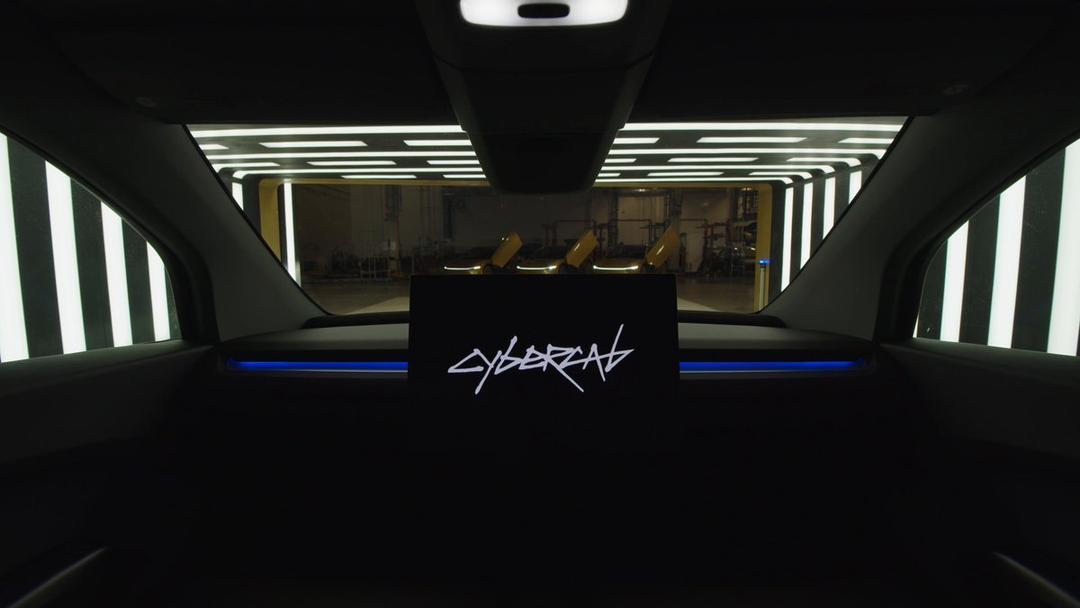
The Cybercab has no steering wheel or pedals, which is why it needs a type of approval Europe has not yet granted at scale. Image: @Tesla on X
Advertisement
Is the Cybercab Legal in Europe?
No, not yet. Thierig was blunt that approval is not Tesla's job. "We want to make sure that we have the right product at that time," he said, according to Handelsblatt (translated from German).
Here is where things stand:
Driverless vehicles: The EU's current path for fully driverless cars is a "small series" approval capped at 1,500 registrations per vehicle type per year across the whole EU, Electrek reports. In March, the European Commission lifted that cap for automated valet parking, but robotaxis remain on the small-series track. The Commission has said it wants large-series approvals, and a UN regulation on automated driving systems is still being written.
Tesla's software: Tesla has no European approval for unsupervised driving. The Dutch regulator RDW approved the supervised system, now sold as Tesla Assisted Driving, which still needs an attentive driver at the wheel. We covered that system's recent speed-cap change in Europe and Tesla's European FSD (Supervised) safety data.
The Cybercab itself: With no steering wheel, the car can't fall back on a human driver. It would need Level 4 certification, a different approval from anything Tesla holds in Europe.
If the rules don't change by 2029, a 1-million-a-year factory would be building a car that could be registered in only small numbers in the EU. That is the core of the skepticism: Electrek called the bet extremely risky.
Advertisement
How Giga Berlin Compares With the Giga Texas Cybercab Line
Giga Texas (Austin)
Giga Berlin (Grünheide)
Status
In production
Not yet built
First Cybercab built
February 2026
Planned 2029
Volume production start
April 2026
2029
Stated capacity
125,000+ per year (installed)
Up to 1,000,000 per year (eventual)
Legal to operate driverless locally?
Yes, inside Tesla Robotaxi geofences in Texas
No EU approval yet
Sources: Tesla Q2 2026 shareholder update, Tesla on X, Electrek. Installed capacity is not the same as actual output.
On paper, the Berlin hall would be eight times the size of the current Texas line. Both are built around Tesla's "unboxed" process, in which sections of the car are assembled in parallel and joined at the end rather than built on one long line. Tesla has said this makes the production line half as long.
Texas is still ramping. Electrek counted 463 Cybercabs registered in the state as of late October, and Tesla's own filing notes that installed capacity "≠ current production rate."
What It Means for US Buyers
For American buyers, nothing changes. Giga Texas remains the only Cybercab factory and the source for every US car. Berlin is aimed at Europe, and its first output is still three years away.
In the US, Tesla is taking invite-only orders for a personal Cybercab at $29,990 plus a $299 monthly autonomy subscription, with delivery limited to five Texas cities and use limited to Tesla's Robotaxi geofences. We broke down the real cost of owning one.
Elon Musk replied to criticism of those geofences on November 14, writing on X that the Cybercab "will be available nationwide, as we receive regulatory approval," and that the monthly fee "is too high." He gave no date, and Tesla has not changed the price.
The Berlin news does signal one thing for US watchers: Tesla is planning Cybercab volume far beyond what US approvals can absorb today. Whether that demand shows up depends on regulators on both sides of the Atlantic, not on factory floor space.
"We are expanding! Cybercab production is coming to Giga Berlin!" — André Thierig, Tesla Giga Berlin plant manager, on X
Politicians welcomed the plan. Brandenburg Minister-President Dietmar Woidke called it "a great day for Brandenburg and a strong signal for Germany as an industrial location," and Federal Economy Minister Katherina Reiche called it "a sign of confidence" in the country's industrial strength (both translated from German, via Handelsblatt). IG Metall noted that Grünheide still has no collective labor agreement.
The bottom line: Tesla is putting about €3 billion ($3.3 billion) into a Giga Berlin hall sized for up to 1 million Cybercabs a year, with construction in 2027 and production in 2029. It still needs a building permit, and the Cybercab still needs European rules that allow driverless cars in volume. US buyers will keep getting their Cybercabs from Texas.