Sila Lands $1 Billion-Plus Silicon Anode Deal With Panasonic: 20% More Energy for US-Made EV Cells, but No Start Date
Sila will supply Panasonic Energy with Titan Silicon anode material from Moses Lake, Washington, in a deal that could top $1 billion. What silicon anodes mean for EV range, charging and China graphite.
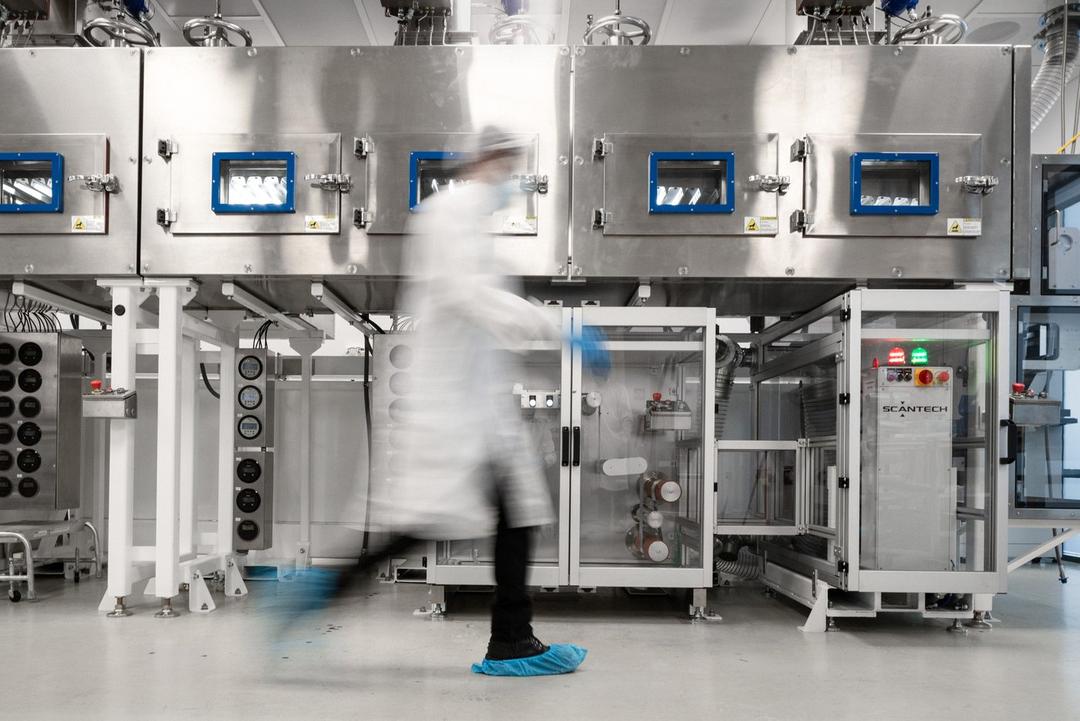
Photo: Sila
The battery cells made in Panasonic's U.S. factories could soon carry a key ingredient made in Washington state. Sila, the California battery materials startup, has signed a multi-year deal to supply Panasonic Energy with its Titan Silicon anode material, an agreement Sila says could be worth more than $1 billion over time.
The material will come from Sila's plant in Moses Lake, Washington, and go into cells built at Panasonic's American factories. Panasonic is Tesla's longtime battery partner. But there are no delivery dates, no volumes and no named car models yet, and the supply depends on Sila's material passing Panasonic's qualification tests.
$1B+
Potential value of the offtake deal over time, per Sila
~20%
Energy density gain vs. leading graphite cells, per Sila
2 GWh
Yearly cell capacity supported by Moses Lake phase one
TBD
Start date and volumes not disclosed
What Sila and Panasonic Announced
Sila announced the agreement on November 18 from its headquarters in Alameda, California. The company will supply Panasonic Energy Corporation of North America with Titan Silicon, a silicon-carbon (Si/C) anode powder, from Moses Lake. The two companies also plan to work together on intellectual property.
Neither side disclosed financial terms, tonnage or when series production starts. A Sila spokesperson told The EV Report that Moses Lake production is being scaled up tenfold to meet the deal. Sila says the expansion should add about 500 manufacturing and construction jobs.
This is not a brand-new relationship. Panasonic first ordered silicon anode material from Sila in December 2023, with the goal of gradually cutting the amount of graphite in its anodes, according to electrive. The new agreement turns that early order into a long-term commercial supply deal.
"This offtake agreement is a major commercial milestone for Sila, a signal that our Moses Lake plant will be ready to supply high-performance materials for our key strategic customers once qualified, and expand as needed." — Gene Berdichevsky, co-founder and CEO, Sila
What Silicon Anodes Do for EV Range and Charging
Every lithium-ion battery has two sides. When you charge, lithium ions move into the anode and are stored there. When you drive, they flow back out. Today, nearly every EV anode is made of graphite.
Silicon can hold far more lithium than graphite by weight. That means a cell can store more energy in the same space, which can mean more range from the same size pack, or the same range from a smaller, lighter and cheaper pack.
The catch has always been swelling. Silicon expands and shrinks a lot as it charges and discharges, and that can crack the anode and wear the battery out early. That is why most cells on the road today blend in only a small amount of silicon. Sila's pitch is a nano-engineered silicon-carbon particle that handles that swelling, so it can replace much more of the graphite.
Sila's claims, which have not been independently verified for this deal:
Range: About 20% higher energy density than leading graphite cells. In 2023, Sila said that could mean up to 100 extra miles for some EVs.
Charging: Sila said in 2023 that Titan Silicon could enable a 10% to 80% charge in about 20 minutes, with future versions aiming for about 10 minutes.
Manufacturing: Sila calls it a drop-in material that works with any cell format and can replace graphite fully or partly.
How much of that shows up in a Panasonic cell will depend on how much silicon Panasonic actually uses. Neither company has published specs for a cell using Sila material.
Sila says its silicon-carbon anode can raise energy density about 20% over graphite. Photo: Sila
Advertisement
Which EVs Could Benefit?
No automaker or vehicle was named in the announcement. What we do know is where the cells get made.
Panasonic runs two U.S. EV battery plants. Its Nevada factory, which opened in 2017 at Tesla's Gigafactory near Sparks, supplies Tesla exclusively, according to Manufacturing Dive. Its second plant, in De Soto, Kansas, began mass production of 2170 cylindrical cells in July 2025 and is designed to serve multiple customers. Panasonic's other publicly reported customers include Lucid, and it is working with Subaru on future EVs.
Panasonic U.S. plant
Opened
Cells
Notes
Sparks, Nevada
2017
Cylindrical
Supplies Tesla exclusively
De Soto, Kansas
July 2025
2170 cylindrical
Targets 32 GWh a year; multiple customers
Combined
-
-
About 73 GWh a year planned
Sources: Panasonic, Manufacturing Dive, electrive
So the Tesla link is real but indirect. Sila sells to Panasonic, and Panasonic sells cells to Tesla and others. There is no confirmation that Sila material will end up in any specific Tesla, Lucid or other model. Separately, Mercedes-Benz has said it plans to use Sila's material in a future electric G-Class.
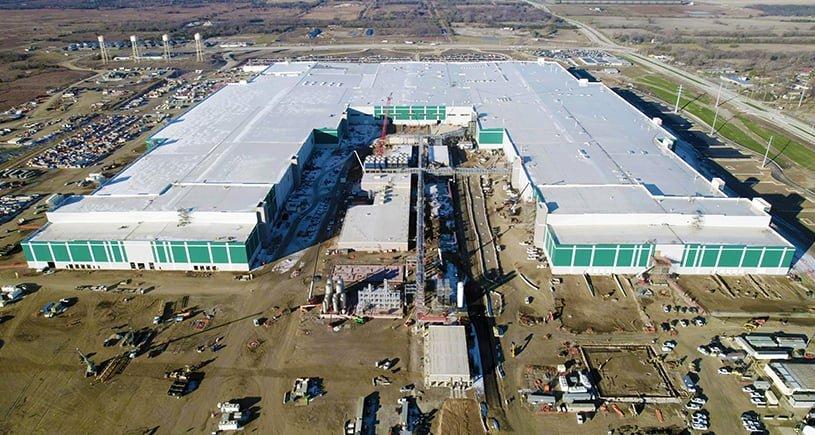
Panasonic's De Soto, Kansas, battery plant began mass production of 2170 cells in July 2025. Photo: Panasonic Energy
When Could Silicon-Anode Cells Arrive?
Not right away. Moses Lake was commissioned in April 2025 and has been producing since fall 2025. Its first phase supplies enough anode material for about 2 GWh of cells a year. That is small: by our math, enough for roughly 25,000 EVs with 80 kWh packs, and a tiny slice of Panasonic's planned 73 GWh of U.S. output.
Sila is raising money to grow fast. It raised $300 million from private investors in July 2026, led by Atreides Management and Sutter Hill Ventures. In August, the Pentagon's Office of Strategic Capital offered a conditional loan commitment of up to $1.4 billion to expand Moses Lake. That loan is not final; Sila still has to meet financial, legal and technical conditions. Long term, Sila wants Moses Lake to reach up to 250 GWh within five years.
Read the fine print
The "over $1 billion" figure is Sila's estimate of potential purchases over time, not a guaranteed order. Supply starts only after the material is qualified, and neither company has given a start date for production cells.
Advertisement
The China Graphite Angle
Graphite is the quiet chokepoint of the EV supply chain. China processes more than 90% of the world's graphite and made 85% of the world's battery anodes in 2022, according to the U.S. Energy Information Administration.
Beijing has used that leverage. It expanded export controls on battery materials, including artificial graphite anode material, in 2025, then paused them as part of a trade truce. On November 9, China extended that pause to January 10, 2027, meaning the threat has been delayed, not removed.
Washington's attempt at tariffs fell short. The Commerce Department found in February that Chinese anode material was dumped and subsidized, with combined duty rates around 160%. But on March 12, the U.S. International Trade Commission voted 2-1 that the imports had not harmed U.S. industry, so the duties never took effect.
That makes a U.S.-made anode material that can replace some or all of the graphite in a cell strategically valuable, which is why the Pentagon is backing it.
"Sila's rapid progress at Moses Lake—from breaking ground to production—has been exceptional." — Yasuaki Takamoto, CEO, Panasonic Energy Corporation of North America
What It Means for U.S. EV Buyers
Nothing changes for the car in your driveway or the one you buy this year. Over the next few years, deals like this are how longer range and faster charging get into mainstream cylindrical cells without a full battery redesign. It also means a little less of each battery depends on China.
The bottom line: Sila now has a big-name, long-term buyer for its Washington-made silicon anode, and Panasonic has a domestic path to cells with up to 20% more energy than graphite. Timing, volumes and which cars get them are still unknown, so treat this as a supply-chain milestone, not a range upgrade you can buy yet.