November 16, 2026·7 min read·By Learn My EV

Tesla Autopilot or FSD Was Engaged at 71 MPH in Naples I-75 Crash That Killed 3, NHTSA Report Shows

Tesla's NHTSA crash report says Autopilot or FSD was 'Verified Engaged' at 71 mph when a Model 3 hit an overturned truck on I-75 in Naples, Florida, killing 3. What it shows and what Tesla redacted.

Tesla Autopilot or FSD Was Engaged at 71 MPH in Naples I-75 Crash That Killed 3, NHTSA Report Shows

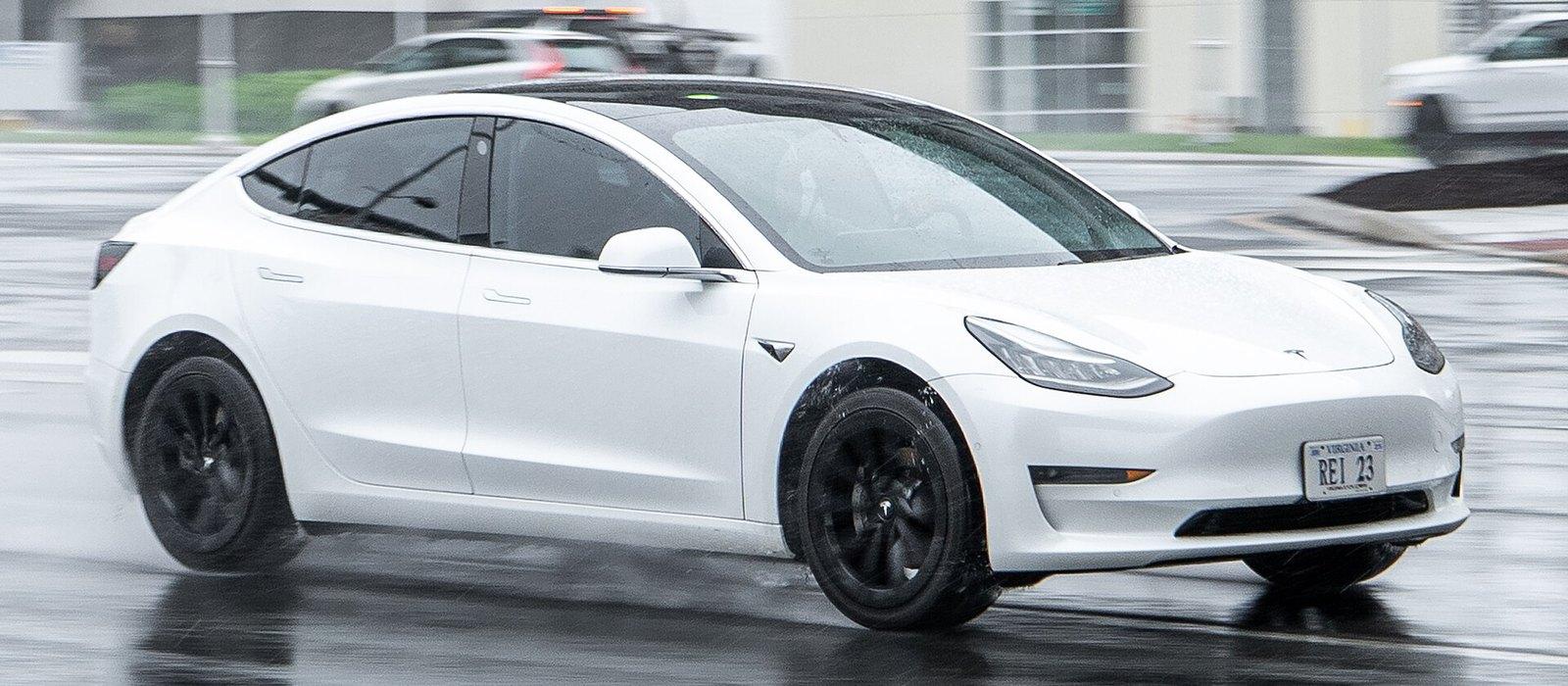
A pre-refresh Tesla Model 3, the same generation as the 2023 car in the Naples crash (not the car involved). Photo: OWS Photography / Wikimedia Commons (CC BY 4.0)

A crash report Tesla filed with federal regulators shows its driver-assistance software was engaged at 71 mph when a 2023 Model 3 hit an overturned box truck and a man who had stopped to help on Interstate 75 in Naples, Florida, on May 31. Three people died.

The filing, first reported by Electrek on November 16, is one row in the National Highway Traffic Safety Administration's crash database. It confirms Autopilot or Full Self-Driving (Supervised) was active. Almost everything else about the car's role is blacked out.

3
People killed, including a Good Samaritan
71 mph
Tesla's reported pre-crash speed
~4 months
From crash to public NHTSA filing
264
Tesla driver-assist crash reports for September 2026

What Happened on I-75 Near Pine Ridge Road

According to the Florida Highway Patrol, a box truck was heading south on I-75 just before 4 a.m. on Sunday, May 31. It left the road, came back across the lanes and flipped onto its side near the Pine Ridge Road exit in Collier County, blocking two lanes.

Jonathan Garcia Arias, 25, of Naples, pulled over to help the truck driver. His sister told Gulf Coast News he was a Marine, "known for his humor, kindness, and selfless nature." A southbound Tesla Model 3 carrying five young men from Naples then struck the truck and Garcia Arias. Two Tesla passengers, ages 18 and 19, died at the scene. Garcia Arias died later at the hospital. Four other people were hurt, including the Tesla's 20-year-old driver.

FHP Senior Trooper Kenn Watson said the Tesla driver faced the underside of the truck with "no lights, no reflectors, nothing warning them that a truck was overturned and blocking two lanes." He added that "it is much tougher for a driver to take evasive action when they are traveling that quickly." The driver's aunt told WINK News he never saw the truck until it was too late, and that he said he was awake and sober. FHP has not confirmed that. It is handling the case as a traffic homicide investigation, which troopers said typically takes 90 days or more.

None of the local coverage in May and June mentioned Autopilot or FSD.

What the NHTSA Crash Report Shows

We found the filing in NHTSA's Standing General Order (SGO) data for Level 2 driver-assist systems: Report ID 13781-16748, a "5-Day" report from Tesla, Inc.

FieldWhat Tesla reported
Vehicle2023 Tesla Model 3, consumer-owned
LocationNaples, FL, highway/freeway
Incident date and timeMay 2026, 07:56 (3:56 a.m. Eastern)
System typeADAS (Level 2)
Engagement statusVerified Engaged
Pre-crash speed71 mph
Highest injuryFatality
How Tesla learned of itLaw enforcement and media
Report submittedSeptember 2026
Software version, ODD status, narrativeRedacted as confidential business information

Source: NHTSA Standing General Order 2021-01 ADAS incident report data, Report ID 13781-16748.

What "Verified Engaged" means

NHTSA's data dictionary defines the engagement field as the highest level of driving automation that was active "at any time during the period 30 seconds immediately prior to the commencement of the crash through the conclusion of the crash." "Verified" means Tesla confirmed it from vehicle data rather than a claim. It does not show the system was still on at impact.

What Tesla Redacted

Tesla claimed three fields as confidential business information: the software version, whether the car was inside its operational design domain (the conditions it is built to handle), and the crash narrative, the written account of what happened. NHTSA notes that a redaction marks a company's claim, not a ruling by the agency that the claim is valid.

Many other fields are marked "Unknown," including both vehicles' pre-crash movement, airbag deployment and seat belt use.

Advertisement

Why the Report Surfaced Months Later

Tesla's report is dated September 2026 and became public with NHTSA's release of that month's filings. Under the SGO, reports are generally due within one or five days of a company getting notice of a crash. Tesla lists police and media as its sources, but the public data does not show when it got that notice.

Late filing is a known issue. In August 2025, NHTSA opened an audit query into Tesla after finding crash reports filed "several months or more" after the crashes. NHTSA attributed the delays to an issue with Tesla's data collection, which Tesla said it had fixed.

The 71 MPH Caveat and What Is Still Unknown

The SGO field records the vehicle's speed "at the time of the incident" as the company reports it. It is a telematics value, not a reconstructed impact speed, and it may not reflect braking in the last moment. It tells us how fast the car was going when the data was captured, not how hard it hit.

Key questions remain open:

  • Autopilot or FSD? The SGO form does not separate the two, and the software version that would hint at it is redacted.
  • Was the system on at impact? "Verified Engaged" covers a 30-second window.
  • Was the driver watching the road? Tesla's cabin camera data is not public. The only account so far is the family's.
  • Did anything brake? Neither the SGO data nor FHP has said.

Whether FHP obtained Tesla's vehicle data has not been made public.

Tesla Driver-Assist Crash Reports Hit a Record

NHTSA's current SGO file lists 264 Tesla reports for crashes in September 2026, the highest of any month in the data, matching Electrek's count. July now shows 245 and March 136. Totals for recent months can climb as late reports arrive. The same release included two more fatal Tesla reports marked Verified Engaged, in El Dorado Hills, California, and again in Naples.

Raw counts are not adjusted for miles driven or fleet size, and one crash can produce multiple reports.

Advertisement

Florida Has Seen This Before

Naples recalls two earlier Florida deaths in which a Tesla on Autopilot went under a truck. In May 2016, Joshua Brown died near Williston when his Model S hit a tractor-trailer crossing the highway. In March 2019, Jeremy Banner died in Delray Beach when his Model 3 hit a semitrailer at 68 mph in a 55 mph zone, about 10 seconds after he engaged Autopilot. The NTSB said neither the driver nor the system made an evasive move.

The circumstances differ. Those trucks were crossing the road in front of the Tesla. In Naples, the truck was already on its side across two lanes, unlit, in the dark.

Open NHTSA Investigations Into FSD

NHTSA has three active cases tied to Tesla's software or reporting:

  • EA26002: An engineering analysis opened March 18, 2026, covering about 3.2 million vehicles, into whether FSD detects and warns drivers when glare, fog or dust degrade the cameras.
  • PE25012: A preliminary evaluation opened in October 2025 covering about 2.88 million vehicles, over FSD running red lights and entering wrong lanes.
  • Crash reporting audit: The August 2025 review of Tesla's late SGO filings.

What Drivers Using Autopilot or FSD Should Know at Night

Tesla's own Model 3 manual warns that Traffic-Aware Cruise Control "may not detect all objects" and may not brake for a vehicle or object that is stationary or only partly in the lane. It lists poorly lit roads at night among conditions that can keep the features from working as intended. Both Autopilot and FSD (Supervised) are Level 2 systems. The driver is responsible at all times.

  • Watch the road, not the screen. Look for hazard lights, debris and dark shapes in the lane.
  • Slow down on unlit interstates late at night, when reaction time is short.
  • Be ready to brake and steer yourself. Don't wait for the car to react first.

If you see a crash on a Florida highway

FHP's advice after this crash: call 911 right away and get yourself to a safe place first. "Get out of the road and immediately notify law enforcement, fire and EMS," Trooper Watson said. Florida's Move Over law (Statute 316.126) also requires drivers to move over a lane, or slow to 20 mph below the limit, for emergency vehicles, tow trucks, utility and sanitation vehicles, road crews and, since 2024, disabled vehicles showing hazard lights.

"Your safety is paramount. You can't help anyone if you yourself become the victim." — Kenn Watson, Senior Trooper, Florida Highway Patrol

The bottom line: Tesla's own filing confirms Autopilot or FSD was engaged within 30 seconds of a crash that killed three people on I-75 in Naples, at a reported 71 mph. It does not say which system, which software version, or what the car and driver did in the final seconds, because Tesla redacted that. The FHP's homicide report is the next place answers may come from.

Related: Tesla Katy Texas Crash: What the Telemetry Data Shows · Tesla Driver Asleep on Ottawa's Highway 417 · Tesla's FSD 7x Safety Claim, Explained

Advertisement