Stellantis Patents a Self-Steering Electric Tow Dolly So Small EVs Can Pull Big Trailers, but It Is Not a Product Yet
Stellantis' US Patent 12,779,916 covers a battery-powered, self-steering electric tow dolly that sits between a car and trailer to cut EV towing range loss. Here's how it works and what exists today.
Photo: Stellantis
Towing is still the weak spot for electric vehicles. Hook a camper to an electric pickup and range can drop by half or more. Stellantis has now patented an odd fix: put a battery-powered, self-steering dolly between the car and the trailer, and let the dolly do the hard work.
The U.S. Patent and Trademark Office issued US Patent No. 12,779,916, titled "Self Propelled Trailer Systems," on November 3, 2026. It is assigned to FCA US LLC, Stellantis' U.S. arm in Auburn Hills, Michigan. The patent says the dolly could let a small car tow a large trailer. But a patent is not a product. Stellantis has not said it will build or sell one.
12,779,916
U.S. patent number, issued Nov. 3, 2026
2023
Filed March 27, 2023 (provisional: Nov. 2022)
20
Claims in the granted patent
None
Announced price or launch date
What Is Stellantis' Electric Tow Dolly?
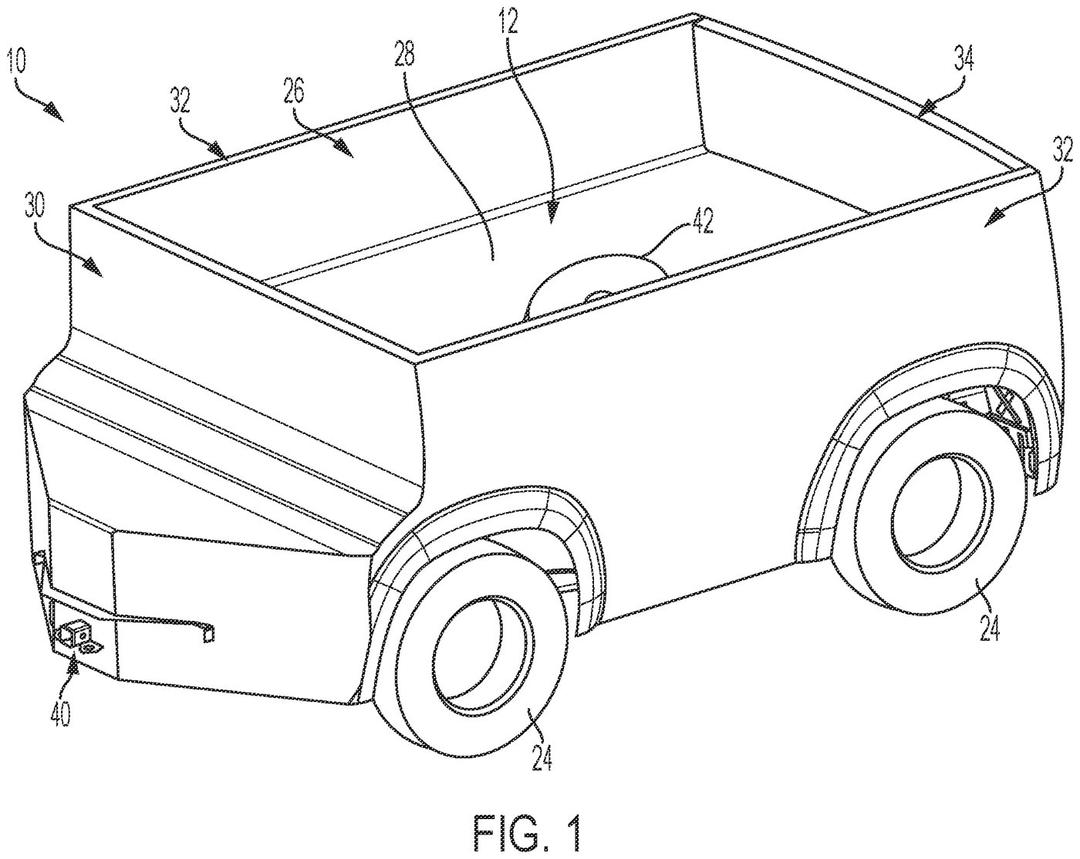
Picture a short, four-wheeled pickup bed with no cab. It has its own electric motor, its own high-voltage battery and its own suspension. The trailer hooks onto a fifth-wheel or gooseneck hitch in the dolly's bed. The dolly then connects to the car with a special tow bar.
The patent abstract describes "a dolly platform system with independent propulsion and control" with "at least one electric traction motor," "a high voltage battery system," and a driver-assistance or autonomous system whose controller "is configured to steer, accelerate, and brake the dolly platform system, based on signals from the one or more sensors and/or cameras."
Claim 1, the core of the patent, adds that the dolly follows "a lead vehicle path while avoiding obstacles and providing trailer stability control." Other claims cover a steer-by-wire module, a second steerable axle, a high-voltage link to share battery power with an EV, and a low-speed remote mode run from the car's screen or a phone app. The patent says that mode helps in tight spots such as "parking spaces, charging stations, camping sites."
The patent names four inventors: Mark E. Stout, Brandon Brady, Mac T. Lynch and Travis D. Bechtel. The application was first published in May 2024.
Figure 1 from the patent shows the dolly as a cab-less truck bed with a hitch (42) in the floor and a tow-bar connection (40) up front. Image: Stellantis / USPTO patent 12,779,916
How It Would Let a Small Car Tow
A normal trailer pushes weight down onto the back of the tow vehicle. That is why towing needs a big truck. The patent says this design takes that load away. Its tow bar "does not support vertical loading between the two vehicles, so no weight is transferred."
The dolly also does the accelerating and braking. In the patent's words, it "does all the work of braking, accelerating and steering of the trailer, leaving the lead vehicle to simply be a guide." Sensors in the tow bar measure push and pull forces, so the dolly knows how much power to add. If steering fails, a lockout turns the link into a rigid tow bar.
The pitch is aimed at buyers who want truck utility only some of the time. The patent says the setup would let people "own a smaller, cheaper, and more fuel efficient vehicle that suits daily use needs." Electrek, which highlighted the patent on November 14, wrote that the dolly could follow "just about anything," including the Stellantis-built Fiat 500e. The patent itself does not name a model.
The same patent also describes a second idea: a self-propelled, wagon-style trailer with wheels at all four corners and the same autonomous controls.
A patent is not a product
Automakers patent many ideas they never build. Stellantis has announced no tow dolly, no price, no battery size, no weight rating and no launch date. Key questions, such as how the dolly handles long grades, emergency stops or state trailer laws, are not answered in the patent.
Advertisement
Why Towing Kills EV Range
A trailer adds weight, rolling resistance and, above all, aerodynamic drag. EVs feel it more than gas trucks because they carry less stored energy and take longer to refuel.
Car and Driver towed a 6,100-pound, 29-foot camper at 70 mph with three electric pickups. The trucks covered less than half the distance they manage lightly loaded at 75 mph. Stellantis' own patent background admits that "electric vehicle range associated with towing can be dramatically reduced."
Test
Trailer
Towing range
GMC Hummer EV (Car and Driver)
6,100 lb camper, 70 mph
About 140 miles
Rivian R1T (Car and Driver)
6,100 lb camper, 70 mph
About 110 miles
Ford F-150 Lightning (Car and Driver)
6,100 lb camper, 70 mph
About 100 miles
Chevy Silverado EV (InsideEVs)
About 11,000 lb, mostly 75 mph
163 miles driven, 14 miles left
Sources: Car and Driver; InsideEVs. In the InsideEVs comparison, the Lightning reached 130 miles, the R1T 100 and the Cybertruck 90; the Rivian and Cybertruck runs were done in cold weather.
Advertisement
Powered Trailers You Can Buy Now
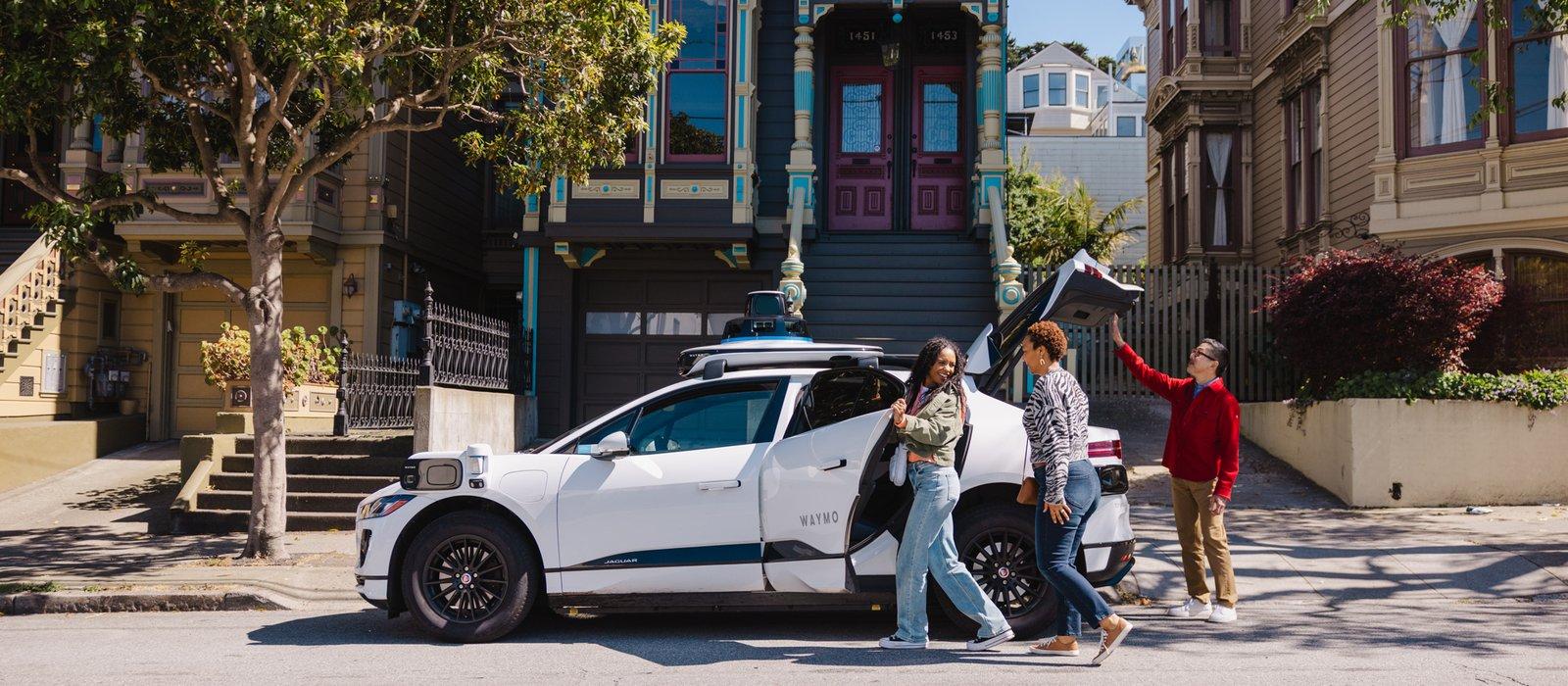
The idea of a trailer that pushes itself is not new. Two U.S. startups already sell travel trailers with their own motors and batteries.
Lightship AE.1: Its "TrekDrive" mode uses hitch sensors to detect pull and then adds motor assist. It can also regenerate energy when braking. Electrek listed the 77 kWh Atmos at $184,000 and the 44 kWh Panos at $151,000, with a $125,000 Terros due in 2027. Lightship says efficiency loss is "negligible" while the trailer has charge.
Pebble Flow: The Magic Pack trim adds dual motors that assist the tow vehicle, a 45 kWh LFP battery and remote hitching and parking. InsideEVs reported prices of $135,500 for the Magic Pack, $175,000 for the Founders Edition, and $109,500 for a planned Flow Standard.
The difference: both are complete campers. Stellantis' dolly would, in theory, work with trailers people already own, including fifth-wheels built for heavy-duty trucks. The patent calls that "backwards compatibility for EVs to pull older trailers."
Stellantis' nearer-term towing answer is the range-extended Ram 1500 REV. Ram lists up to 14,000 pounds of towing, about 145 miles of battery-only range and up to 690 miles total with its gas generator. Ram CEO Matt VanDyke told Mopar Insiders this month the truck is now planned for the "middle of next year." Pricing is not set.
What It Means for US Buyers
Nothing changes today. You cannot order this dolly, and you may never be able to. If you tow often, a big-battery truck, a range-extended truck or a powered trailer are the real options for now.
Still, the patent shows Stellantis is thinking about towing as a separate, add-on job instead of a reason to buy a full-size truck. If anything like it reaches showrooms, the price of the dolly will decide whether a small EV plus a rentable tow module beats owning a pickup.
"The dolly system does all the work of braking, accelerating and steering of the trailer, leaving the lead vehicle to simply be a guide." — US Patent 12,779,916, FCA US LLC
The bottom line: Stellantis now holds a U.S. patent for a battery-powered, self-steering tow dolly that could let a small car pull a big trailer without the usual range hit. It is a clever idea on paper, but there is no product, price or timeline, so towing buyers should plan around trucks and powered trailers that exist today.