November 15, 2026·6 min read·By Learn My EV

2026 Midterms and EVs: Rivian, Lucid and Scout CEOs Don't Expect the $7,500 Tax Credit Back. What It Means for Buyers

After the Nov. 3 midterm elections, Rivian, Lucid and Scout CEOs say they aren't counting on the $7,500 federal EV tax credit returning. Here's why, and what EV buyers should do now.

2026 Midterms and EVs: Rivian, Lucid and Scout CEOs Don't Expect the $7,500 Tax Credit Back. What It Means for Buyers

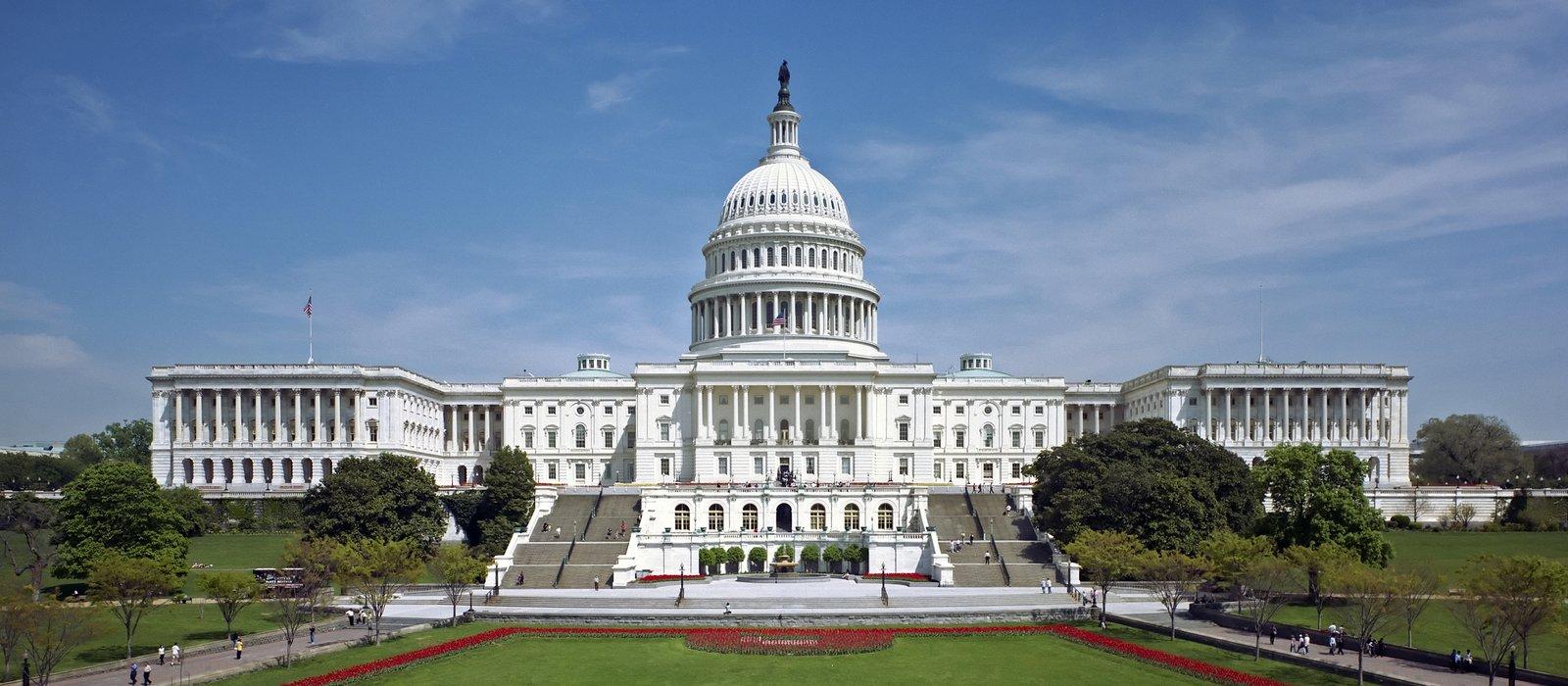
Photo: Architect of the Capitol / Wikimedia Commons (Public domain)

The 2026 midterm elections handed Democrats big gains in Congress. The heads of three American EV makers are telling customers and investors not to read too much into that. Rivian CEO RJ Scaringe, Lucid CEO Silvio Napoli and Scout Motors CEO Scott Keogh all told CNBC they are not planning on the federal EV tax credit coming back.

That matches what policy analysts said before Election Day: a new Congress can write bills, but it cannot sign them into law. For anyone shopping for an EV this winter, the math is the same as it was last week. There is no federal credit, and nothing in the election results changes that in the near term.

Nov. 3
2026 midterm Election Day
$0
Federal EV credit for vehicles acquired after Sept. 30, 2025 (was up to $7,500)
Jan. 3
Date the new Congress is sworn in (2027)
2/3
Vote needed in both chambers to override a presidential veto

What Happened in the 2026 Midterm Elections?

Voters went to the polls on Tuesday, November 3. As of 10:19 a.m. CT on November 15, the Associated Press count showed Democrats had won 256 House seats and Republicans 169, with 10 House seats not yet counted as won for either party. In the Senate, AP's count as of 10:18 a.m. CT showed 55 seats for Democrats, a total that includes two independents who caucus with them, and 44 for Republicans, with one seat not yet counted for either party. Those counts may change as remaining races are called.

The new Congress will be sworn in on January 3, 2027. President Trump's term runs through January 2029, and any bill still needs his signature to become law.

What the Rivian, Lucid and Scout CEOs Said

The three executives spoke to CNBC in the days after the vote. None pointed to a bill, a timeline or a commitment to restore the credit.

  • RJ Scaringe, Rivian (Nov. 6): "We try not to plan for those sort of things. The reality is it's probably going to have less of an impact than we think." He said he hopes Congress and the president can find middle ground, but added, "I think we're going to actually have a lot of challenges getting things done."
  • Silvio Napoli, Lucid (Nov. 9): "You know, they say, 'Plan for the worst and … hope for the best.' That's all we can say." He also said, "Anything positive, we'll take it."
  • Scott Keogh, Scout Motors (Nov. 11): Keogh said Scout was built from day one not to count on legislation. If help does come, he would rather it go to factories than buyers: "I always prefer it on the production side." His reasoning: "Anything that can drive down production cost is going to, of course, get passed along to the customer."
Rivian R2 electric SUV on a mountain road in Utah, EV incentives after the 2026 midterms
Rivian R2s on a media drive in Utah. CEO RJ Scaringe says the election will probably have "less of an impact than we think." Photo: Rivian
Advertisement

Why Congress Can't Quickly Bring Back the EV Tax Credit

The federal clean vehicle credits were ended by the One Big Beautiful Bill Act, signed July 4, 2025. Under IRS guidance, the new-EV credit (up to $7,500), the used-EV credit and the commercial clean vehicle credit are not allowed for any vehicle acquired after September 30, 2025. The home charger credit ended for equipment placed in service after June 30, 2026.

Bringing any of that back would take a new law. In an October 21 analysis, InsideEVs noted that a Democratic Congress could draft bills to restore EV credits and tighten fuel economy rules again. But the president would likely veto them, and overriding a veto takes a two-thirds vote in both the House and Senate. Jeff Meyer, director of mobility and energy at CERA, told S&P Global that even with a new majority, "there would still be the challenge of a veto and then overcoming that veto, which is a very, very high hurdle." InsideEVs concluded meaningful EV policy change is unlikely before 2028.

EVs may not be at the front of the line anyway. CNBC reported that House Democrats plan to focus first on health insurance subsidies, Medicaid cuts, oversight of the administration and affordability.

Where EV incentives can still come up

Rachel McCleery, executive director of the Coalition for Reimagined Mobility at SAFE, told CNBC she expects "legislative debates over what to do moving forward," adding that "bringing down the cost of vehicles for U.S. consumers is top of mind for Democratic policymakers." A debate is not a law, and no specific bill has been announced.

Advertisement

Tesla and SpaceX Stocks Swung on the Results

Investors reacted fast. Tesla and SpaceX lost more than $420 billion in combined market value in the two days after the election, then recovered most of it, according to a November 14 Motley Fool analysis published on Yahoo Finance. The author tied the drop to fears of new congressional probes and limits on data centers, which Tesla needs to train its Full Self-Driving and Optimus AI.

The same analysis said Tesla's Cybercab, which drew regulator scrutiny soon after launch, could face investigation. We found no announced congressional probe of the Cybercab as of November 15. The existing federal audit is covered in our Cybercab Dallas launch story.

What This Means If You're Shopping for an EV Now

In short: shop as if the federal credit is not coming back, because nothing in the election results changes the law today.

  • Don't wait for a federal credit. No bill to restore it has been introduced in the new Congress, which does not convene until January 3, 2027. Any bill would still need the president's signature or a two-thirds override.
  • Check state programs. In California, the MyFirstEV program gives first-time EV buyers or lessees $3,500 off a new EV priced up to $50,000, or $1,750 off a certified pre-owned EV up to $25,000, at participating brands. It runs first-come, first-served until funds run out. See which brands qualify.
  • Compare automaker deals. Kelley Blue Book data from Cox Automotive put the average new-EV transaction price at $55,879 in September 2026, versus $50,562 for the overall market, with EV incentives averaging 11% of the price. With no federal credit, those automaker incentives matter more.
  • Know what's left federally. Our guide covers what tax breaks still exist in 2026.

Sales have slowly picked back up without the credit. Cox Automotive estimates 262,649 EVs were sold in the U.S. in the third quarter of 2026, up 6.1% from the second quarter and about 6.4% of all new-vehicle sales. That was still down 39.5% from a record third quarter in 2025, when buyers rushed to beat the credit's expiration.

"Ultimately, incentives can help accelerate adoption, but the industry can't build its long-term strategy around them." — Stephanie Valdez Streaty, director of industry insights, Cox Automotive

The bottom line: The midterms shifted seats in Congress, but not the rules at the dealership. The federal EV tax credit is gone for vehicles acquired after September 30, 2025, the new Congress is not seated until January 2027, and any restoration would need the president's signature or a veto override. Rivian, Lucid and Scout are planning without it, and buyers should too. Look to state rebates and automaker discounts instead.

Related: Do EVs still qualify for a tax credit in 2026? · California's $3,500 instant EV rebate · Scout starts building trucks in South Carolina

Advertisement