The Trump administration has proposed removing a federal safety requirement that all vehicles must include a manual brake pedal — and it's a move designed specifically to clear the runway for self-driving cars that will never have a human driver in the seat.
The National Highway Traffic Safety Administration (NHTSA) filed a notice of proposed rulemaking on June 25, 2026, targeting Federal Motor Vehicle Safety Standard No. 135 — the regulation that currently requires every car sold in the United States to have foot-operated brake controls. Under the proposal, vehicles "designed to be driven exclusively by automated driving systems" would be exempt from that requirement entirely. The public has 30 days to submit comments before the agency decides whether to make it permanent.
"We are at the cusp of the greatest technological revolution in vehicle technology since the innovation of the Model T."
— Jonathan Morrison, NHTSA AdministratorWhat FMVSS No. 135 Is — and Why It Matters for AVs
FMVSS No. 135 sets the braking performance standards for all passenger vehicles sold in the US. It mandates not just that brakes work, but that they're operated by foot-controlled pedals. That standard made perfect sense when every car was driven by a human. For a robotaxi with no steering wheel and no pedals, it's a regulatory wall.
Until now, any company building a purpose-built autonomous vehicle without standard controls had to petition the federal government for an individual exemption. The exemption process is slow, capped at small volumes, and creates a vehicle-by-vehicle approval gauntlet that prevents scaled commercial deployment. This rule change would remove that barrier outright for fully autonomous vehicles — replacing the pedal requirement with a performance-based alternative: the same stopping distance and braking criteria, just achievable by whatever hardware and software the AV developer chooses to use.
What changes under the proposed rule
- Removed: The requirement that brake controls be foot-operated pedals
- Kept: All stopping distance and braking performance standards — same safety bar, different method
- Who it covers: Vehicles designed exclusively for automated driving — no human controls at all
- Who it doesn't cover: AVs with manual backup controls (steering wheel, pedals) still follow existing rules
- Next step: 30-day public comment period before the rule is finalized
Who Benefits Most: Tesla Cybercab and Zoox
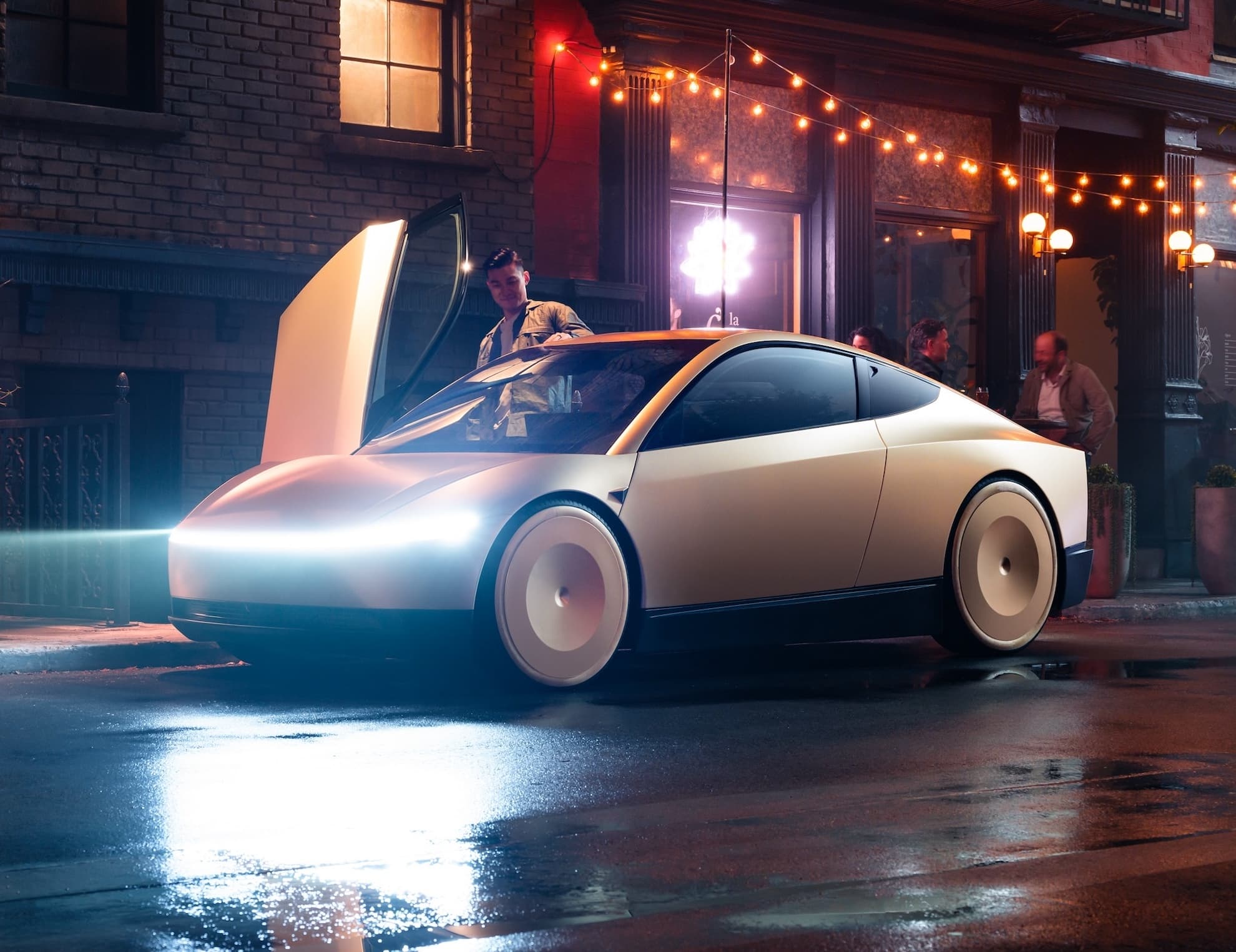
The Cybercab is the most obvious winner. Tesla has spent years developing its two-seat robotaxi with no steering wheel and no pedals — and has explicitly refused to apply for individual exemptions, betting instead that the regulatory framework would eventually catch up. Tesla CEO Elon Musk has said repeatedly that broad regulatory approval, not exemptions, is how the Cybercab will reach scale. This proposal, if finalized, gets Cybercab significantly closer to that outcome.
Zoox — the Amazon-owned AV startup — already holds an exemption from FMVSS requirements for its custom-built robotaxi. It's been using that exemption to run demonstrations in select cities and is now waiting on a second exemption to operate commercially. A rule change like this would simplify Zoox's path considerably, eliminating the need for the exemption process going forward.
Waymo, by contrast, is less directly affected. Its vehicles are retrofitted versions of production cars — the Jaguar I-Pace — which already have standard controls. Because those vehicles pass existing FMVSS requirements as-built, Waymo can deploy as many vehicles as it wants without the exemption process. Purpose-built designs without pedals are where the old rules created friction, and that's where this fix is targeted.
30
Days the public has to comment before NHTSA decides on the rule
135
The Federal Motor Vehicle Safety Standard number being updated
2
AV companies most directly impacted: Tesla Cybercab and Zoox