November 9, 2026·6 min read·By Learn My EV

Ford Mach-E Battery Study: 36,000 SUVs Keep 92% Battery Health After 5 Years, 91% Past 100,000 Miles

Ford tracked battery health on 36,000+ 2021 Mustang Mach-Es over 2 billion miles. The average battery keeps 92% after five years and better than 91% past 100,000 miles. Here's how it compares with Tesla, Recurrent and Geotab.

Ford Mach-E Battery Study: 36,000 SUVs Keep 92% Battery Health After 5 Years, 91% Past 100,000 Miles

Photo: Charles from Port Chester, New York / Wikimedia Commons (CC BY 2.0)

Five years ago, the first Ford Mustang Mach-E crossovers rolled into driveways, and with them came the question every EV buyer asks: how long will the battery last? Ford now has a real-world answer. After tracking battery health across more than 36,000 2021 Mustang Mach-Es that have covered about 2 billion miles, Ford says the average battery still holds 92% of its usable capacity.

Better still for anyone shopping a used one, the cars driven hardest have held up nearly as well. More than 2,000 Mach-Es past 100,000 miles average better than 91%. Here is what Ford's Mach-E battery degradation study found, how it was done, how it stacks up against Tesla and independent data, and what you can do to keep your own battery healthy.

92%
Average battery health after 5.2 years
91%+
Average for 2,000+ Mach-Es past 100,000 miles
88%
Average for 30+ Mach-Es past 200,000 miles
87–97%
Range covering 95% of the 36,000 cars

How Ford Measured Mach-E Battery Degradation

Ford published the results on November 9 in a post written by Kevin Vander Laan, its technical leader of high-voltage battery cells and systems. The data set covers 2021 model year Mustang Mach-Es sold to retail and fleet customers in the United States and Canada, driven in all 50 states. The figures are current as of August 2026, after an average ownership period of 5.2 years.

The key measure is state of health, the share of the battery's original usable capacity it can still store. Ford pulls that from the vehicles' own battery management data rather than from owner surveys or one-off range tests. According to InsideEVs, the cars in the study averaged about 55,000 miles.

Ford also stressed the spread, not just the average. "Averages can hide variation, so that range matters," Vander Laan wrote. That range is narrow: 95% of the cars fell between 87% and 97% battery health.

"Our report card slowly trickles in over time. So here we are with a five-year report card, and it looks great."

Kevin Vander Laan, Ford, to InsideEVs

Mach-E Battery Health by Mileage

The most useful number for used-EV shoppers is what happens at high mileage, because that is where worry about battery replacement tends to live. Ford's results show a gentle slope, not a cliff.

Group of 2021 Mach-EsNumber of carsAverage battery health
Whole study (avg. about 55,000 miles)36,000+92%
Over 100,000 miles2,000+Better than 91%
Over 200,000 miles30+88%

Ford did not publish a separate figure at 50,000 miles, and it did not break out results for the Standard Range and Extended Range battery packs. All 2021 Mach-Es use nickel-cobalt-manganese (NCM) cells, so the chemistry is the same across the study. Ford did not offer a lithium iron phosphate (LFP) pack in the Mach-E until the 2023 model year.

Advertisement

What 92% Battery Health Means for Range

Battery health translates roughly into range. A 2021 Mach-E California Route 1 rated by the EPA at 305 miles would, at 92% health, be good for about 280 miles on a full charge. A Standard Range rear-drive model rated at 230 miles would land near 212 miles. Those are estimates; real-world range also depends on weather, speed and tires.

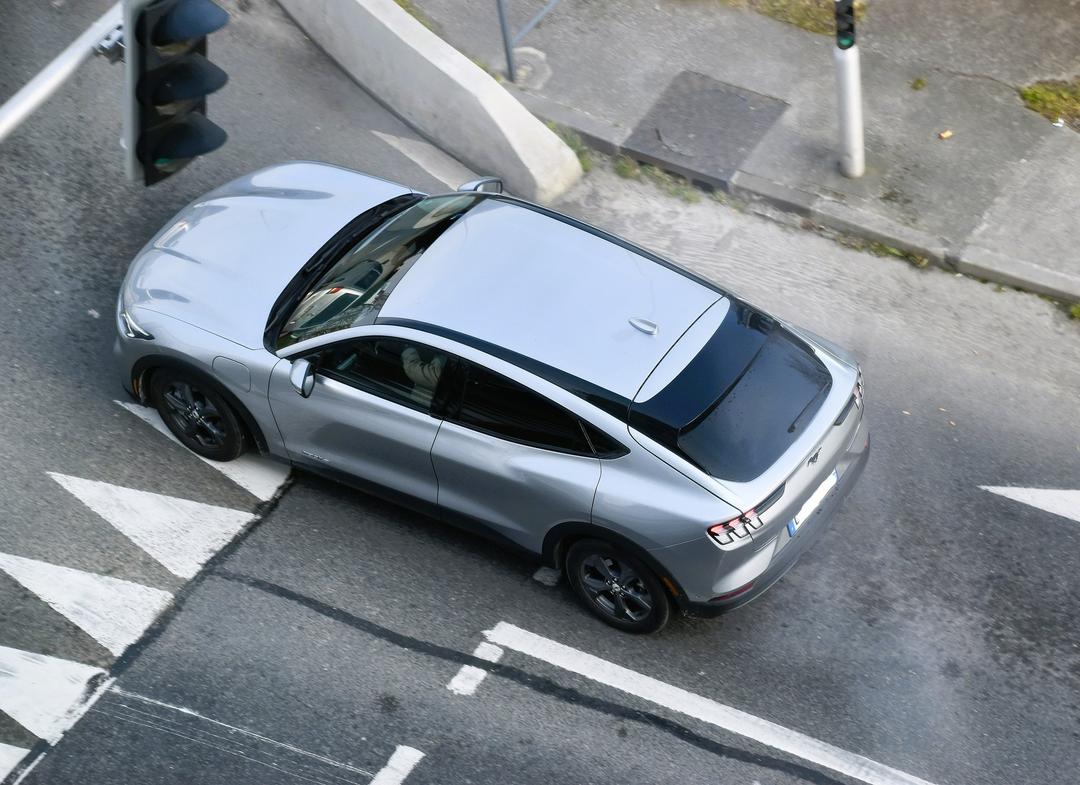
Silver 2021 Ford Mustang Mach-E seen from above, the model year covered by Ford's 36,000-vehicle battery degradation study
A 2021 Mustang Mach-E. Every car in Ford's study is a 2021 model with NCM battery cells. Photo: Charles from Port Chester, New York / Wikimedia Commons (CC BY 2.0)

How the Mach-E Compares With Tesla and Independent Data

Ford's numbers line up with what other large studies have found, which is reassuring because each one measures differently.

  • Tesla: In its 2023 Impact Report, Tesla said Model 3 and Model Y batteries lose about 15% of capacity on average after 200,000 miles, and Model S and Model X about 12%. Ford's 200,000-mile Mach-E group, at 88% health, is in the same neighborhood, though that group is only about 30 cars.
  • Aviloo: The European battery-testing firm reported in September, from roughly 500,000 tests, that most models showed 90% to 94% health at 150,000 km (about 93,000 miles). It put the Mach-E at 92.5%, ahead of the Tesla Model 3 at 88.9% and Model Y at 90.3%.
  • Recurrent: The used-EV data firm, which tracks opt-in owners, says the average EV keeps 97% of its original range after three years and 95% after five.
  • Geotab: The fleet telematics company's 2024 analysis of nearly 5,000 EVs found average degradation of 1.8% a year, down from 2.3% in its 2019 study.

Ford's 92% after a little over five years works out to roughly 1.5% a year, slightly better than Geotab's fleet-wide average. Since the companies use different methods, the fair conclusion is not that one brand wins but that modern liquid-cooled EV batteries are aging far more slowly than early critics predicted.

Advertisement

What the Mach-E Battery Warranty Covers

The Mach-E's high-voltage battery is covered for 8 years or 100,000 miles in the US, whichever comes first. Ford's Canadian Mach-E FAQ spells out the capacity terms: the battery should retain at least 70% of its original capacity over that period. Based on Ford's data, the typical 2021 Mach-E is more than 20 points above that line at the five-year mark.

Ford says its battery-electric vehicles from the last five years are designed to last at least 10 years and average more than 90% health at 100,000 miles, citing a 2026 field data study. For a deeper look at how warranties and degradation work across brands, see our guide to how long EV batteries last.

Ford's battery care advice

  • Use Level 2 charging at home for daily driving, and save DC fast charging for road trips or when you need it.
  • Precondition the car while it is plugged in, so the battery reaches a good temperature on grid power.
  • Park in the shade on hot days when you can.
  • Follow the charge-level recommendation in the Ford app for your specific vehicle.
  • For NCM packs like the 2021 Mach-E, frequent charges to 100% generally are not needed. Some newer LFP-equipped Fords benefit from an occasional 100% charge to keep the battery management system calibrated.

What speeds up wear

  • Heat. InsideEVs reports that cars in the hot Southwest tend to age faster than those in milder climates.
  • Habitual extremes. Frequent fast charging to 100% and regularly running close to empty wear a battery faster than staying roughly between 20% and 80%.
  • One average is not your car. If you are buying used, ask for a battery health report rather than relying on the fleet average.

Why This Study Matters Now

Mach-E sales have slowed, and the 2021 models are now moving into the used market in large numbers. For buyers looking at a five-year-old EV, battery health is the biggest unknown, and this is one of the largest data sets an automaker has released on a single model year. Ford also says the results feed into its next-generation vehicles, including the Universal Electric Vehicle platform and the Fathom pickup.

The bottom line: Ford's study of more than 36,000 first-year Mustang Mach-Es shows an average of 92% battery health after about five years, and better than 91% even past 100,000 miles. That is well above the 70% warranty floor and in line with Tesla and independent data. If you own one, charge at home on Level 2, limit fast charging, and keep it out of the heat. If you are shopping for a used one, battery health is less of a gamble than many buyers assume, but still ask for a health report on the specific car.

Related: How long do EV batteries really last? · Used EV buying checklist · Should you charge to 80% or 100%?