July 26, 2026·6 min read·By Learn My EV

NHTSA Denies Tesla Door-Release Defect Petition — But Opens New Safety Rulemaking

Federal regulators rejected a petition asking them to investigate the hidden manual door releases on 2022 Tesla Model 3 vehicles, citing a lack of evidence. But in the same decision, NHTSA agreed to start writing an entirely new federal safety standard on emergency door egress — one that would apply to every automaker, not just Tesla.

NHTSA Denies Tesla Door-Release Defect Petition — But Opens New Safety Rulemaking

The National Highway Traffic Safety Administration has made a split decision on Tesla's door handles: it denied a petition asking it to open a formal defect investigation into the hidden manual door releases on 2022 Tesla Model 3 vehicles, but in that same ruling, it agreed to begin writing a brand-new federal safety standard on emergency door egress — one that would eventually apply to every automaker selling cars in the U.S., not just Tesla.

179,031
2022 Model 3 vehicles covered by the denied petition
15
Deaths cited by Congress's SAFE Exit Act tied to door-handle access
1
Matching complaint NHTSA found, from the petitioner's own vehicle

What the Petition Asked For, and Why NHTSA Said No

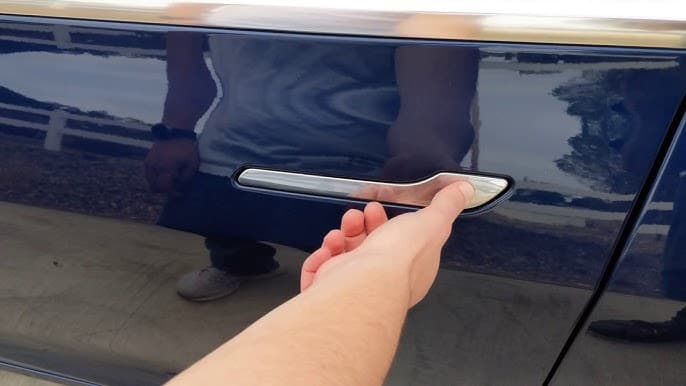
The petition, filed November 7, 2025 by Tesla owner Kevin Clouse, argued that the Model 3's "emergency egress controls for the mechanical door release are not readily accessible and clearly identifiable," which he said violated federal safety standard FMVSS 206 — the rule governing door locks, latches, and hinges meant to keep occupants inside a vehicle during a crash.

NHTSA's denial came down to two things. First, a technical gap: FMVSS 206 doesn't actually contain any requirement addressing how a mechanical door release must be labeled or where it must be located, so there was nothing on the books for the agency to enforce. Second, a numbers problem — as of March 13, 2026, NHTSA said it found exactly one consumer complaint matching the petition's allegation, and that complaint traced back to the same vehicle identification number as the petitioner's own car.

What that one complaint described
  • A front-impact crash in which the vehicle lost power and the electronic door-release mechanism stopped working
  • NHTSA noted the 2022 Model 3's owner's manual includes an "In Case of Emergency" section with illustrations showing the manual release location
  • The agency's conclusion: the issue "does not indicate the likelihood of a safety related defect that would warrant a defect investigation," and is "best addressed through the rulemaking process"

The Bigger Move: A New Rule for the Entire Industry

Denying the specific petition is only half of what NHTSA did. A separate petition, filed with the agency's Office of Rulemaking on November 4, 2025, asked NHTSA to create a new federal standard mandating "a robust and obvious door egress system in all motor vehicles." NHTSA granted that one, and will now begin a formal rulemaking process on emergency door releases industry-wide.

"A concealed or hard to locate door release could prevent an operator or occupant from exiting the vehicle in the event of an emergency, such as a crash or fire."

— NHTSA, in its rulemaking filing

It's worth being precise about what "commencing rulemaking" actually means here: it's the start of a process, not a guarantee of a final rule. Federal vehicle safety standards typically take years to develop and finalize, and whatever requirement eventually emerges would apply to future vehicles across the industry — not force any changes to the millions of Teslas already on the road today.

How Tesla Got Here

This decision is the latest chapter in a controversy that's been building for roughly a year. In September 2025, NHTSA opened a separate investigation into Model Y door handles after parents reported children getting trapped in back seats when the vehicle's 12-volt system lost power. Tesla design chief Franz von Holzhausen said shortly after that the company was working on a redesign combining the electronic and manual releases into a single motion, and Tesla has since shipped a mechanical fix on cars sold in China.

In December 2025, NHTSA opened another probe specifically into the Model 3's emergency door releases — the same vehicles at the center of this petition — following reporting on fatal crashes in which occupants were unable to get out. In January 2026, members of Congress introduced the SAFE Exit Act, citing 15 deaths tied to door-handle access issues. Tesla is also facing a number of fatal door-handle-related lawsuits. Rivian, separately, announced in late 2025 that it was redesigning the interior door handle on its upcoming R2 SUV to place the manual release in a more visible spot next to the electronic one — a sign the broader industry is treating this as a real design lesson, not just a Tesla-specific issue.

If you drive a Tesla, don't wait for a recall
  • Manual door releases on current Tesla models are located inside the cabin — find yours now, before you ever need it in an emergency
  • Check your owner's manual's emergency section for the exact location and operating motion for your specific model and model year, since designs have changed over time
  • Make sure anyone who regularly rides in your car, including kids old enough to understand it, knows where the release is and how it works

The bottom line: Tesla avoided a defect investigation that could have forced a recall on a matter of months, but that's a narrower win than it looks. NHTSA didn't say the door-handle design is safe — it said the current rulebook doesn't have a specific requirement to enforce, and then turned around and started writing one. Rulemaking is the right long-term fix for the industry, but it's slow, and it won't change anything about the car already in your driveway. The practical takeaway for owners is the same regardless of how the regulatory process shakes out: know where your manual release is before you need it.