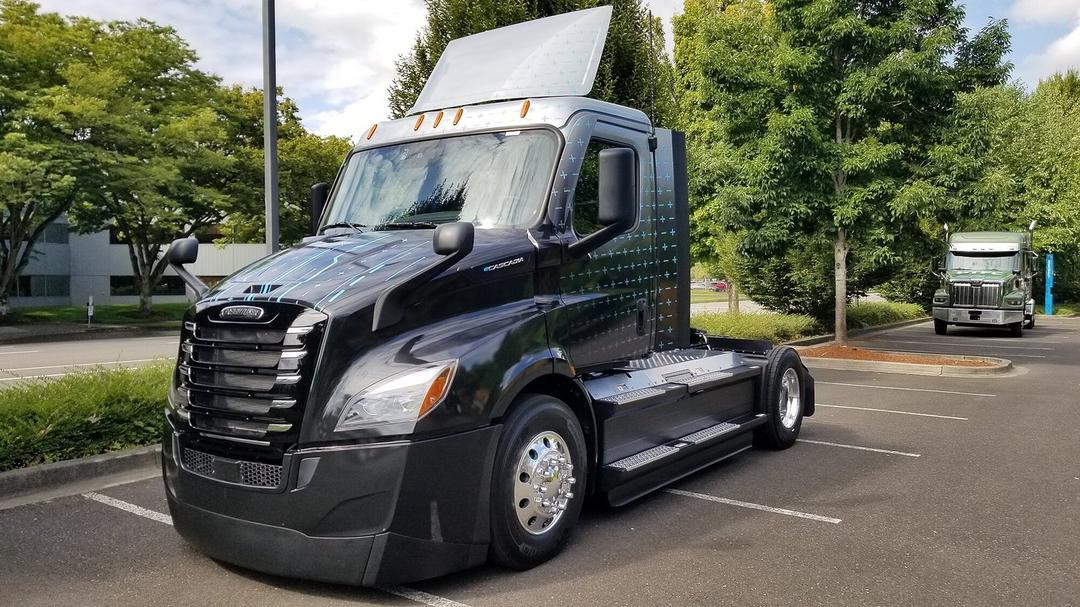
Photo: Nevoya. A Nevoya Freightliner eCascadia battery-electric truck at a Greenlane truck charger in California.
Meta is paying for 25 more electric semi trucks, and none of them will haul a single Meta product. Electric carrier Nevoya announced on November 12 a multi-year deal with Meta to put 25 Class 8 battery-electric trucks on Interstate 10 between San Bernardino, California, and Phoenix, Arizona, starting in 2027.
Nevoya expects the trucks to cover about 4 million freight miles a year for regular shipping customers. Meta's role is to buy the emissions benefit through environmental attribute certificates (EACs). It is Meta's second corridor with Nevoya, after a Houston-Dallas program in Texas, and it lands while US diesel sits above $6 a gallon.
25
Class 8 battery-electric trucks on I-10
4M
Freight miles per year expected, starting 2027
63
Trucks in Nevoya's planned Houston-Dallas fleet
$6.13
US average diesel per gallon, week of Nov. 9 (EIA)
What Meta and Nevoya Agreed To
Nevoya, a Los Angeles-based all-electric truckload carrier, will run the trucks, hire the drivers and find the freight. Meta is not buying trucks or shipping its own goods on them. According to the press release, the deal includes:
- 25 Class 8 battery-electric tractors on the I-10 lane linking the Inland Empire with Phoenix.
- New truck charging infrastructure on the corridor, which Nevoya expects to open to all freight operators, not just its own fleet.
- Charging matched 100% with renewable energy certificates.
- A 2027 start and roughly 4 million miles a year. That works out to about 160,000 miles per truck annually, the kind of high utilization electric trucks need to pay off.
The I-10 deal is a standalone agreement between Nevoya and Meta. Electrek reports it also gives Meta a framework to open more electric truck corridors later.
How the EAC Model Works, and Why It Matters
An environmental attribute certificate represents the verified emissions cut from a unit of clean activity, here a mile of freight moved by an electric truck instead of a diesel one. The trucking version is often called "book and claim": the carrier books the emissions savings, an auditor verifies them, and a buyer claims them in its climate reporting, even if its own boxes never ride on those trucks.
Why would a company pay for that? Meta counts freight, including the materials trucked in to build its data centers, as part of its Scope 3 emissions, the pollution created in its supply chain rather than by its own operations. I-10 is a busy route for that kind of construction freight.
For Nevoya, the payoff is money up front. Electric trucks still cost more to buy than diesel trucks, and heavy-duty chargers are expensive to build. A multi-year buyer commitment helps finance the trucks and underwrite the chargers before freight demand fully builds. Nevoya co-founder John Verdon made that case directly:
"Electric trucks already win on the corridors we run; what unlocks them at scale is multi-year demand that drives financial and operational innovation." — John Verdon, Co-Founder and Chief Commercial Officer, Nevoya
Book and claim, in one sentence
Shippers keep using whatever trucks they use today, while a buyer like Meta pays to put electric trucks on a specific lane and gets audited credit for the diesel emissions those trucks avoid.
The Texas Deal That Came First
Meta's first Nevoya deal ran through the Center for Green Market Activation (GMA), a Washington, DC-based nonprofit that pools corporate buyers. Its first trucking procurement, announced in January 2026, backed 40 Freightliner eCascadia trucks on the Houston-Dallas corridor. Buyers included Amazon, eBay, Etsy and Meta.
In September, Google joined with 25 more trucks, part of what it called a planned 63-truck fleet on the route. Google said the full fleet should travel about 11 million miles a year and avoid 92,000 metric tons of CO2. GMA called the arrangement "the first large-scale application of book and claim to zero-emission trucking."
| Corridor | Trucks | Buyers | Status |
|---|
| Houston-Dallas, TX (I-45) | 63 planned | GMA alliance: Amazon, eBay, Etsy, Meta and others; Google | Rollout through 2026-2027 |
| San Bernardino, CA - Phoenix, AZ (I-10) | 25 | Meta (standalone deal) | Starts 2027 |
Sources: Nevoya, electrive, Google via electrive.