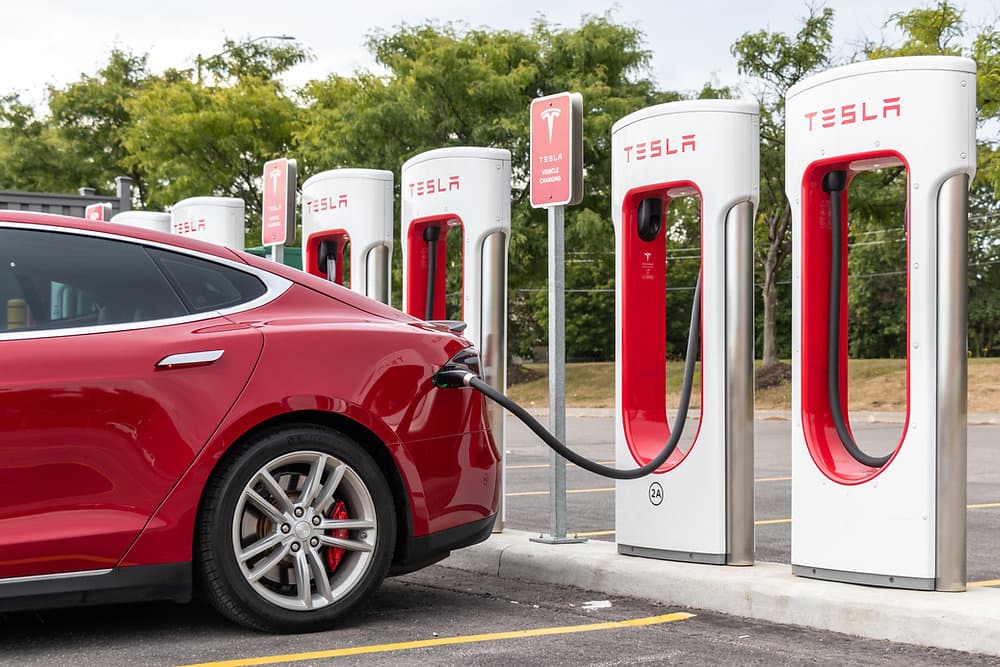
Last month’s announcement of Ford Motor Co's (F.N) decision to utilize Tesla’s TSLA.O electric-vehicle (EV) charging network has been a seismic event in the EV industry, posing serious questions about the adoption of a national US charging standard and the future of emergent charging startups.
From 2024, more than 12,000 Tesla Superchargers will be available to Ford EV drivers in North America. The bold move puts immense pressure on other automakers and the Biden administration to match this level of accessibility or ramp up their efforts significantly, say industry insiders.
Tesla CEO Elon Musk envisions that Ford’s decision, being the second-largest seller of EVs in the US, will propel Tesla's North American Charging Standard (NACS) to become the go-to standard in the region. This development has inevitably impacted the valuation of smaller entities promoting the rival Combined Charging System (CCS).
With many charging startups struggling with customer service and lacking funds to upscale their networks to align with Tesla's, the pressure is on. The Biden administration has yet to comment. However, Transport Secretary Pete Buttigieg has stated that the government would not interfere in the market dynamics determining the prevailing standard.
Previously, the US government allocated $7.5 billion in federal funding to encourage companies to adopt CCS as part of Biden's strategy to combat climate change, aiming to shift 50% of all new US vehicle sales to EVs by 2030.
With EVs accounting for a mere 6% of new car sales in the US last year, building and maintaining a charging network is an economically challenging venture. Recent consolidations such as Shell's (SHEL.L) $169 million acquisition of Volta and BP's (BP.L) purchase of AMPLY Power indicate a further market tightening if Tesla's standard gains wider acceptance.
The lack of a definitive national charging standard could spell trouble for the EV industry. "We are now probably locked into having two separate charging standards co-existing for the foreseeable future," warns Chris Harto, senior policy analyst at Consumer Reports. While some companies are planning to adopt Tesla's technology, others remain uncertain.
As the industry grapples with these changes, the ultimate goal remains a seamless, efficient, and widely accessible EV charging infrastructure for the future of transportation.