July 16, 2026·6 min read·By Learn My EV

Europe's EV Sales Just Topped 1 Million in the First Half of 2026 as Demand Accelerates

New battery-electric car registrations in the EU hit 950,521 through May 2026 alone — enough for ACEA to confirm the million-unit mark for the first half. Add in the rest of Europe and both BEVs and plug-in hybrids, and total European EV sales reached roughly 2.5 million for H1, up 27% year over year. Here's what's actually driving the surge.

Europe's EV Sales Just Topped 1 Million in the First Half of 2026 as Demand Accelerates

Europe's electric vehicle market just crossed a milestone that would have seemed unlikely a year ago: more than 1 million new battery-electric cars registered across the EU in the first half of 2026. The European Automobile Manufacturers' Association (ACEA) confirmed 950,521 new BEV registrations through May alone — enough, ACEA itself noted, to guarantee the million-unit mark would be surpassed once June's numbers came in. Zoom out to all of Europe (including the UK, Norway, and Switzerland) and count plug-in hybrids too, and separate data puts total H1 electrified vehicle sales at roughly 2.5 million, up 27% year over year.

950,521
New EU battery-electric cars registered, Jan–May 2026
20%
BEV share of the EU new-car market through May
+27%
Pan-European EV sales growth, H1 2026 vs. H1 2025

Two Different "1 Million" Numbers — and Why That Matters

It's worth being precise about what's being counted, because two respected data sources are describing the same trend at different scales. ACEA's figures cover only the 27 EU member states and only count pure battery-electric vehicles (BEVs) — no hybrids, no plug-in hybrids. That's the dataset behind the "1 million" milestone: 950,521 BEVs registered in the EU through May, with March, April, and May each individually topping 200,000 units (234,532 in March, 200,117 in April, 203,417 in May).

Separately, market-data firm Benchmark Mineral Intelligence tracks a broader "Europe" region — EU plus the UK, Norway, Switzerland, and other EFTA countries — and includes plug-in hybrids (PHEVs) alongside BEVs. On that basis, Europe sold roughly 2.5 million electrified vehicles in H1 2026, with June alone delivering 530,000 units, up 31% year over year and 28% month over month. Both numbers point the same direction — accelerating demand — they're just measuring different-sized boxes.

Where the Growth Is Coming From

Three of the EU's four largest car markets are driving most of the gain. Year-to-date through May, Italy's BEV registrations were up 75.7%, France's climbed 55.4%, and Germany's rose 40.9% — together accounting for 63% of all EU BEV registrations. Not every market is participating equally: Belgium grew a modest 2.8%, and the Netherlands actually declined 9.7% year-to-date.

CountryBEVs Registered (May 2026)YoY Change
Germany59,969+39.3%
France37,412+93%
Denmark15,020+37.3%
Italy13,274+86.5%
Belgium12,586+11%
Netherlands12,363+4.9%
Spain12,049+34.5%

June reinforced the trend rather than reversing it: France, Denmark, Spain, and Portugal all posted their highest-ever single-month EV sales. In France specifically, Renault captured roughly 20% of the entire EV market, with four of the country's five best-selling electric models wearing a Renault badge — including the newly launched Twingo EV, which became France's third best-selling EV within months of its first deliveries.

Affordable, dedicated-platform EVs are starting to do for Europe's small-car segment what earlier compliance cars never could.

Tesla's European Rebound

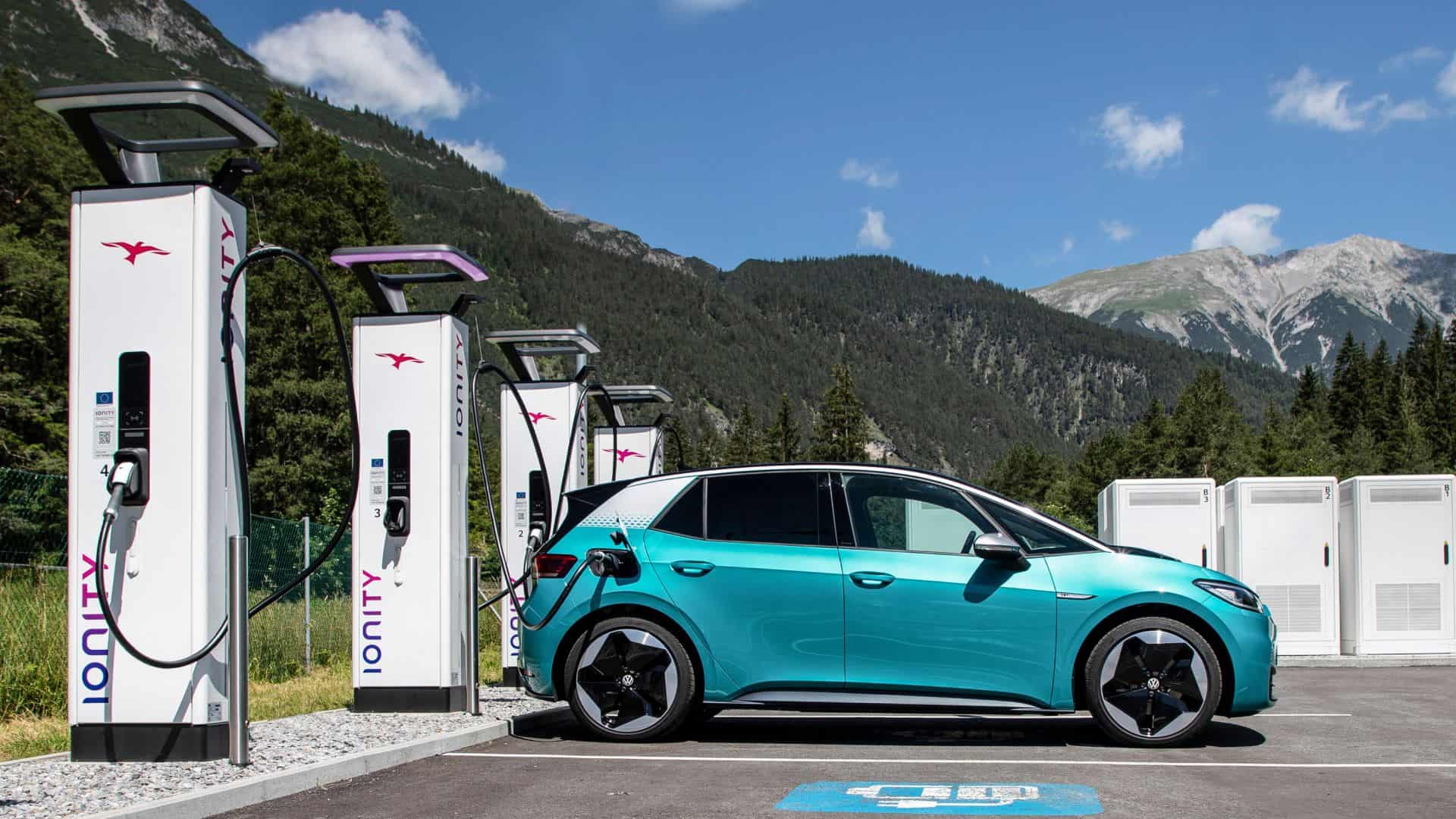
Tesla's numbers stand out because ACEA's manufacturer-level data doesn't separate BEVs from hybrids for most automakers — Tesla, selling only BEVs, is the one brand that can be cleanly tracked. Across the EU, EFTA, and the UK, Tesla registered 21,767 vehicles in May alone, up 152% year over year, good for roughly 8% of the region's total EV sales that month. Year-to-date through May, Tesla had sold 89,180 vehicles in the region, up 77%, averaging about 18,000 units a month — a sharp recovery from the sales slump that dogged the brand through 2025.

Why Demand Is Accelerating Now

What's driving the surge
  • Cheaper, purpose-built small EVs: Volkswagen Group has started production of its new affordable EVs — the ID.Polo, Cupra Raval, and Skoda Epiq — in Spain, part of a wave of dedicated-platform small cars replacing older, less profitable compliance EVs
  • Stricter emissions rules: Tightening EU CO2 targets continue to push automakers toward EV volume
  • Government incentives: Renewed national subsidy programs in several markets, plus higher fuel prices, are pulling forward demand
  • Chinese PHEV imports: Higher EU tariffs on Chinese-built BEVs (introduced in late 2024) pushed Chinese automakers to pivot toward exporting plug-in hybrids instead — PHEV imports from China more than quadrupled in 2025 and kept climbing through 2026

The Hybrid Caveat

Worth flagging for anyone reading EU powertrain statistics closely: hybrid-electric vehicles (HEVs), not BEVs, remain the single most popular powertrain in the EU market, at 37.8% share in May versus BEVs' 20%. But ACEA's HEV category doesn't distinguish between full hybrids and "mild hybrids" — vehicles that use a small electric motor only as a starting aid or for turbo assistance and can't drive on electric power alone. To a buyer, those feel like ordinary gas cars. That means some of the reported decline in combustion-engine share (down from 38% to 30.1% year over year) is really just relabeling, not genuine electrification — a nuance that's easy to miss in the topline numbers.

May 2026 EU powertrain mix
  • Hybrid (HEV): 37.8% — includes mild hybrids that can't drive on electric power alone
  • Petrol: 22.4%
  • Battery-electric (BEV): 20%
  • Plug-in hybrid (PHEV): 9.7%
  • Diesel: 7.6%

The Global Contrast

Europe's acceleration looks even more striking set against the rest of the world. North American EV sales are down roughly 20% year-to-date amid weaker policy support and the looming expiration of the US federal EV tax credit. China's domestic EV market fell 14% year-to-date even as Chinese automakers export more aggressively than ever — nearly 500,000 new energy vehicles left China in June alone, with Europe a top destination. Of the three major regions, Europe is the only one where 2026 growth accelerated rather than stalled.

The bottom line: Crossing 1 million EU BEV registrations for the first half of 2026 isn't a fluke — it's the product of cheaper, purpose-built small EVs finally reaching the market, sustained regulatory pressure, and incentives arriving at the same time fuel prices are rising. Tesla's European rebound and Renault's dominance in France show demand isn't limited to one brand or one price point. The one real caveat is on the ICE side of the ledger: not every "electrified" vehicle sold in Europe this year is meaningfully cleaner than the car it replaced.