November 13, 2026·6 min read·By Learn My EV

Uber EV Miles Hit a Record 20.5% in Europe and 10.5% in the US and Canada, but Uber Says 2030 Is Out of Reach

Uber's latest Electrification Update shows EVs handled a record 20.5% of Uber miles in Europe and 10.5% in the US and Canada in Q3 2026. Here are the city leaders, missed goals, driver incentives and the robotaxi factor.

Uber EV Miles Hit a Record 20.5% in Europe and 10.5% in the US and Canada, but Uber Says 2030 Is Out of Reach

Photo: Comyu / Wikimedia Commons (CC0). An "Uber Premier EV" Tesla Model Y in Tokyo.

More Uber rides are electric than ever before. In the third quarter of 2026, battery-electric cars handled 20.5% of all on-trip miles on Uber in Europe and 10.5% in the United States and Canada, according to the company's latest Electrification Update. Both are records, and both cross a line for the first time: one in five miles in Europe, one in ten in North America.

The same report carries a less flattering admission. Uber says it missed its 2025 electrification goals and that its 2030 targets "continue to be out of reach without stronger, coordinated action across government and industry." Here is what the numbers show, where EV rides are most common and what it means for riders and drivers.

20.5%
Share of Uber miles driven in EVs in Europe, Q3 2026
10.5%
Share in the US and Canada, Q3 2026
207M+
Zero-emission trips worldwide in Q3, up 52% from a year earlier
434,000+
Active EV drivers on Uber per month, up about 52%

The Record Numbers, in Plain English

Uber measures progress by the share of on-trip miles, the miles driven with a passenger aboard, completed in zero-emission vehicles. In practice that means battery EVs; Uber says hydrogen fuel cell cars appear only "very occasionally." Hybrids and plug-in hybrids don't count.

  • Trips: EV drivers completed more than 207 million Uber trips worldwide in Q3 2026, an average of over 26 every second, and 52% more than in Q3 2025.
  • Drivers: More than 434,000 EV drivers were active on Uber in the average month of the quarter, almost 52% more than a year earlier. Uber counts a driver as active if they completed at least one trip that month.
  • Growth: Uber says Q2 and Q3 2026 brought "some of our largest quarterly increases" in EV mileage share across Canada, Europe and the US, and the largest quarterly gains in the US and Canada since 2023.

That rebound matters because North America had stalled. InsideEVs notes that EV uptake on Uber in the US and Canada stayed roughly flat from Q3 2024, and Uber's own report says the region's EV mileage share actually fell for the first time in Q4 2025 before climbing again this year.

Where Uber Rides Are Most Electric

MarketEV share of Uber miles
AmsterdamOver 50%
LondonOver 40%
VancouverOver 35%
Europe (22 countries)20.5% (Q3 2026)
US and Canada10.5% (Q3 2026)

Uber's Europe figure covers 22 countries, including the UK, Germany, France, Spain, Italy, the Netherlands and Norway. The company says its drivers are switching to EVs "up to 5 times faster than the average motorist" in Canada, Europe and the US, which makes sense: a car driven full time racks up miles quickly, so cheaper electricity and lower maintenance pay off faster than they do for a commuter.

Uber credits the city leaders to "thoughtful policies, industry investment, and strong charging networks." Both London and Amsterdam have tightened emissions rules for taxis and private-hire cars, and in London Uber spent years collecting a per-mile fee from riders to fund drivers' EV purchases.

Advertisement

Uber's Goals: Missed and Out of Reach

Uber set some of the most aggressive electrification targets in the ride-hailing business. Its own sustainability page now shows how far short it has fallen.

GoalTargetResult
London and Amsterdam, end of 2025100% of rides zero-emission41% of rides
7 European capitals, end of 202550% of mobility kilometers in EVs32%
US, Canada and Europe, end of 2030100% of rides zero-emissionUber says "out of reach"
Global, end of 2040100% of rides and deliveries zero-emission, micromobility or transitStill the stated goal

Uber blames barriers it says are largely outside its control: high upfront EV prices, financing and insurance costs, limited and complicated charging, and inconsistent government policy. In the US, the loss of the federal EV tax credit in 2025 removed one of the biggest purchase incentives.

"While tech advancements, new models, and partnerships have made EVs more affordable, charging infrastructure hasn't kept up."

Uber policy researchers Rainer Lempert and Irene Arvaniti, as quoted by Axios

Charging, Not Price, Is Now the Biggest Hurdle

Uber's driver research backs that up. In a survey of about 21,000 drivers in 13 countries, conducted with PSB Insights and reported by Axios in June, charging access passed vehicle cost as the top obstacle to going electric. In the US, 24% of drivers without an EV named charging as their biggest barrier, compared with 11% who named cost, and 49% of US EV drivers said they want more fast-charging stations.

The charging companies feel the demand. EVgo has said rideshare vehicles now account for about a quarter of the energy it dispenses, up from roughly 10% in 2021.

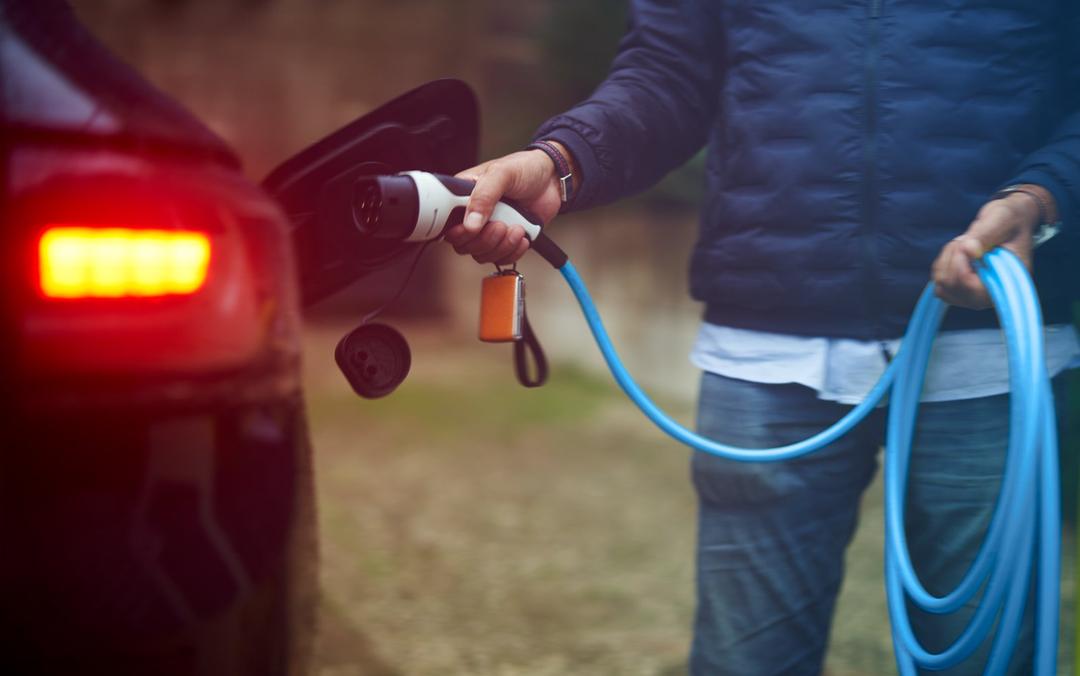
Driver plugging a charging cable into an electric car, from Uber's Uber Electric announcement
Uber's own driver survey found charging access has overtaken vehicle cost as the main reason drivers don't switch to EVs. Photo: Uber
Advertisement

What Uber Offers Drivers and Riders

Uber says it has spent "hundreds of millions of dollars" on electrification programs, incentives, partnerships and product changes. The offers have shifted, and some have shrunk:

  • Uber Electric: In October 2025, Uber renamed Uber Green to Uber Electric, reflecting that the US option had become all-electric earlier that year. Riders can request an EV directly in the app.
  • Battery-aware matching: Uber matches EV drivers only with trips their remaining range can complete. It now works with Kia, Hyundai, Ford, Nissan, Volkswagen and Mercedes-Benz vehicles in 25 countries.
  • Go Electric grant: A one-time $4,000 credit for drivers who switch from gas to a personally owned or leased battery EV. Uber expanded it nationwide in April, but its terms page now limits new applications to Diamond-tier drivers in New York City and Massachusetts, with applications elsewhere "temporarily paused." It's capped at the first 2,500 approved drivers, who must complete 100 EV trips by December 31, 2026.
  • Discounts: Uber has offered drivers partner discounts on new EVs and charging, including $1,000 toward an EV bought through TrueCar.
Incentives have been cut before

In December 2025, Bloomberg reported that Uber ended monthly EV bonuses for US drivers, which had been worth up to about $4,000 a year, and was winding down rider-funded clean-air programs in London and France. If you drive for Uber, check the current terms in the Driver app before buying a car based on an incentive.

The Robotaxi Factor

Uber's report points to one more force that could push its numbers up: driverless cars. "The coming wave of autonomous (electric) vehicles will create a major tailwind in achieving electrification at scale," the company wrote. Most robotaxis in service today are electric, so each one that joins Uber's network adds zero-emission miles without needing a driver to buy an EV. How fast that happens depends on partners, and that picture is changing: see our coverage of Waymo ending its Uber partnership in Austin and Atlanta and Uber's robotaxi targets for 2027.

Uber emissions per passenger mile, 2025
  • Europe: 186 grams of CO2 per passenger mile, down 19% since 2021
  • US and Canada: 318 grams per passenger mile, down 12% since 2021
  • The figures include "deadhead" miles driven on the way to pick up riders
  • Uber says lower fuel economy in US and Canadian cars explains most of the gap

The bottom line: One in five Uber miles in Europe and one in ten in North America are now electric, both records, and US growth has restarted after a dip late last year. That still leaves Uber far from its promise of all-electric rides in the US, Canada and Europe by 2030, a goal the company itself now calls out of reach. For riders, an EV is easier to get than ever, especially in Amsterdam, London and Vancouver. For drivers, the economics can work, but charging access and shrinking incentives remain the sticking points.

Related: Waymo and Uber robotaxi partnership ending · How much does it cost to charge an electric car? · Europe EV sales in October 2026