Why Now
Tesla didn't reference it directly in its announcement, but the timing follows a shooting at a Supercharger station in Twin Falls, Idaho on August 1, 2026, in which three people were killed and seven injured outside an adjacent In-N-Out restaurant. In the aftermath, EV owners and outlets covering the industry — including this site — discussed the lack of a quick, built-in way to drive away from a Supercharger stall without first unlocking the charge port, and pointed to EVject, a third-party breakaway charging adapter Tesla had previously sued over safety concerns.
Limitations worth knowing
- The feature is US-only for now; Tesla hasn't said when or whether it will expand to Canada or other markets using the same NACS connector
- Pre-2021 Model S and Model X vehicles aren't supported
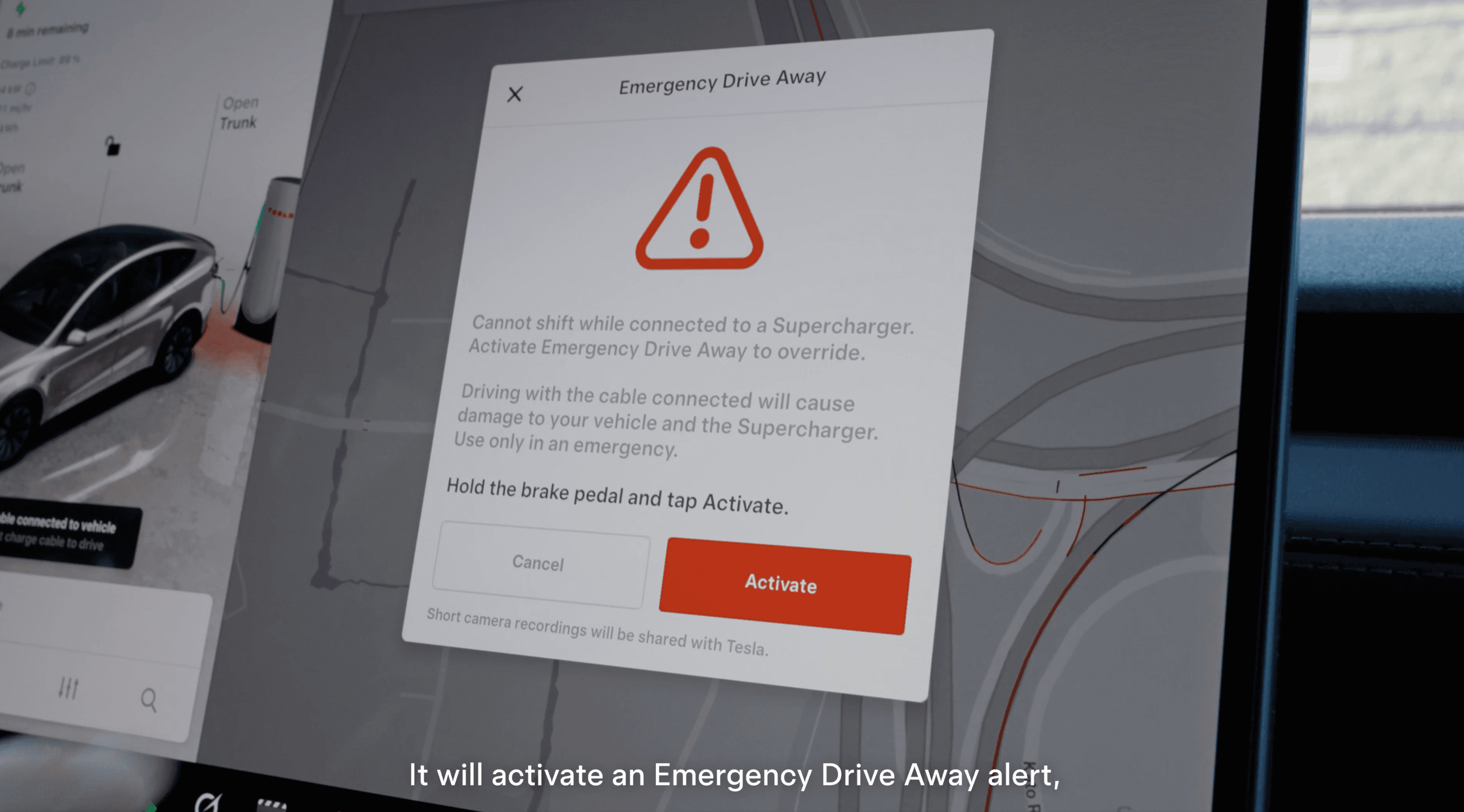
- Using it will damage the vehicle's charge port and the Supercharger's cable, requiring repairs on both ends
- It requires deliberately holding the brake and confirming a warning screen — it isn't instantaneous or automatic
The bottom line: Emergency Drive Away is a real, if blunt, response to a gap that became impossible to ignore after Twin Falls — Tesla removed a software lockout rather than engineering a clean release mechanism, and it's upfront that doing so comes at a real cost to the car and the charger. It's better than being stuck, but it's a stopgap, not a redesign, and for now it only protects drivers charging in the US.