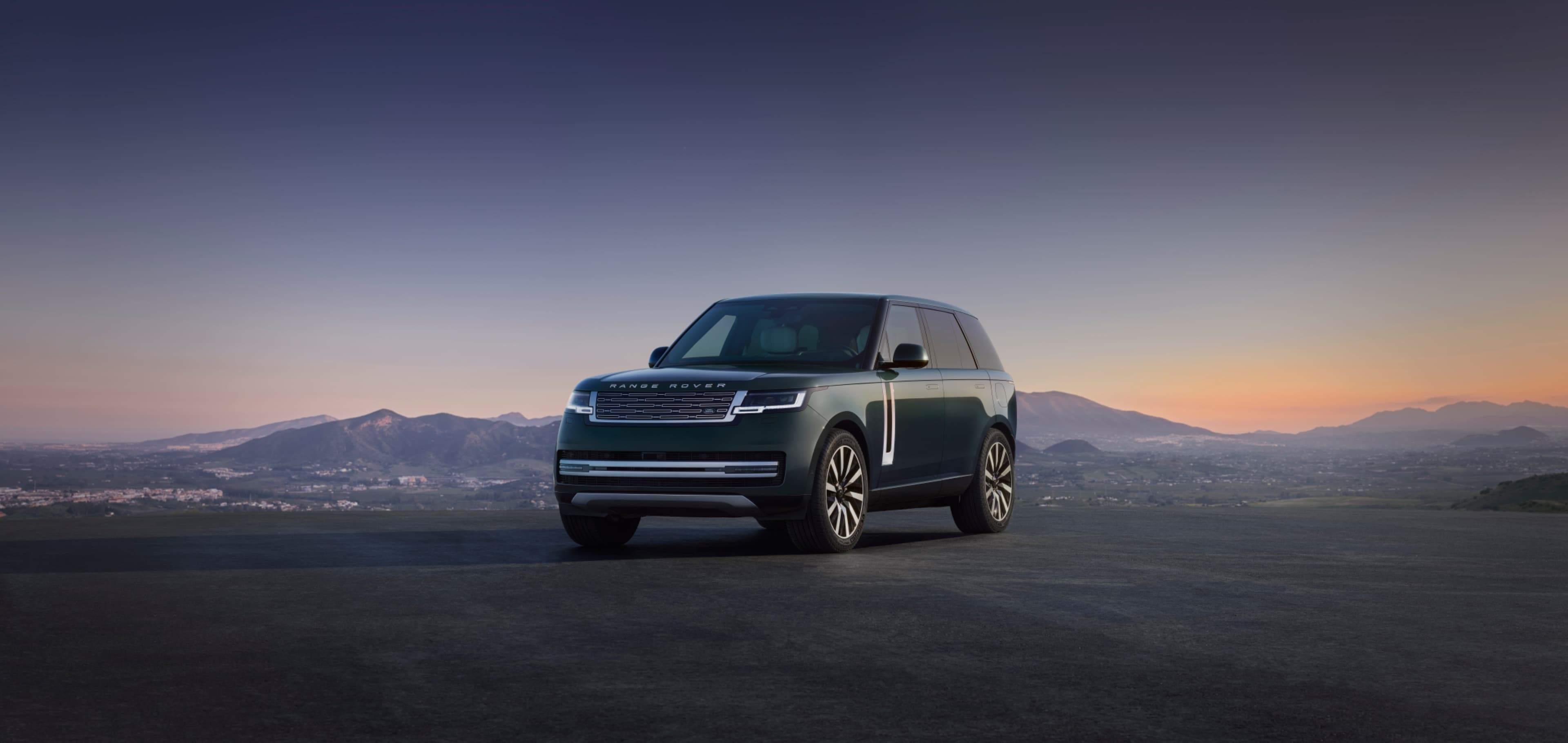
After years of teasing, Land Rover has officially unveiled the Range Rover Electric — the flagship SUV's first-ever zero-emission variant. It looks almost identical to the fifth-generation combustion Range Rover that arrived in late 2021, with changes limited to a slipperier grille, new wheels, and a reworked underbody. What's different is everything underneath.
543
Horsepower from the dual-motor setup
333
Miles of EPA-estimated range
$138,000
US starting price before destination fees
Power and Charging
Two electric motors, both engineered and built in-house by Land Rover, produce 349 hp each for a combined 542-543 hp (accounts vary slightly by measurement standard) and 627 lb-ft of torque — enough to beat the twin-turbo V8's output and shave the 0-60 mph time to 4.3 seconds, a tenth quicker than the gas model. Energy comes from a double-stacked, 118.5 kWh lithium-ion battery built from 344 prismatic cells on an 800-volt architecture, with a native NACS charge port for the North American market. On a 350 kW DC fast charger, Land Rover says the battery goes from 10-80% in about 22 minutes, adding up to 137 miles of range in just 10 minutes.
Confirmed specs
- 118.5 kWh double-stacked battery, 344 prismatic cells, 800V architecture
- 542 hp combined output, 627 lb-ft torque, 0-60 mph in 4.3 seconds
- 333 miles EPA-estimated range (372 miles under Europe's WLTP cycle)
- Silicon-carbide semiconductors in the drive motors
- ThermAssist heat management system, covered by part of over 300 new patent filings, cutting heating energy use by up to 40% and adding up to 25 miles of cold-weather range
- Twin-chamber air suspension and rear-axle steering, plus twin-valve active dampers borrowed from the Range Rover Sport SV
Off-Road Claims Remain Aggressive
Land Rover is positioning the Electric as no less capable off-road than its combustion siblings. The new Integrated Traction Management and Intelligent Driveline Dynamics systems are rated to handle inclines up to 33 degrees while pulling away and rolling climbs of up to 45 degrees. Sensors automatically detect water depth and raise ride height, giving the SUV a maximum wading depth of 35.4 inches. Land Rover also says the Electric runs about 7 dBA quieter than the V8 under full throttle, a meaningful gap in real-world cabin noise.
The Range Rover Electric is nearly indistinguishable from the combustion SUV it's based on — the changes are almost entirely under the skin, not on the surface.