October 17, 2026·6 min read·By Learn My EV

Olinia: Mexico's Government-Built Electric Car Costs About $8,600. Here's What It Is

Mexico's state-backed Olinia EV is a six-seat city van for about $8,600, due in summer 2027. Specs, the Olinia Carga, who will build it, and the challenges.

Olinia: Mexico's Government-Built Electric Car Costs About $8,600. Here's What It Is

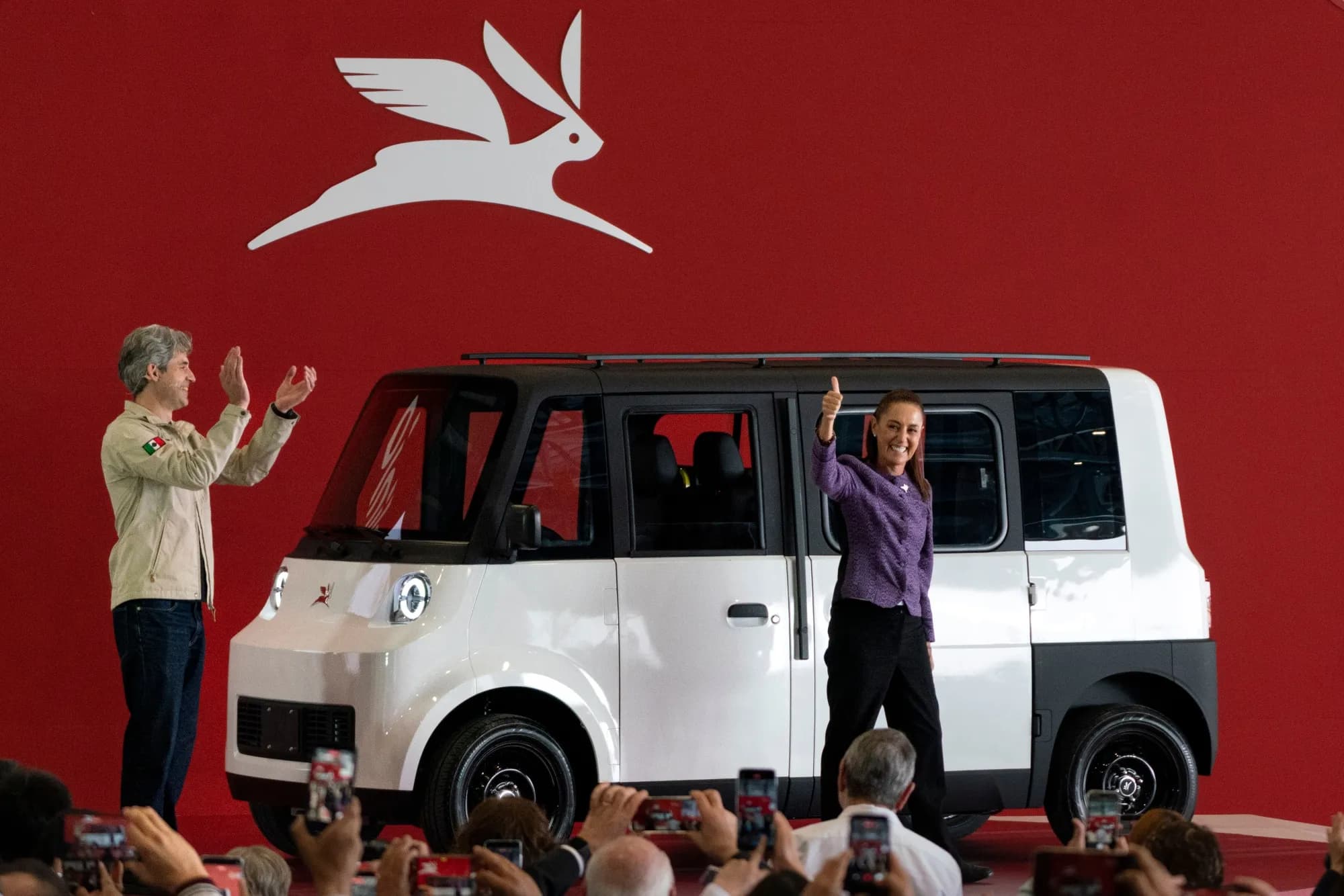
Photo: Government of Mexico

Mexico builds cars for GM, Ford, Toyota and more. Now its government wants to build one of its own. Olinia, a state-backed line of small, cheap electric vehicles championed by President Claudia Sheinbaum, has gone from a campaign-style promise to a working prototype. The first model, the six-seat Olinia Uno, is priced at about 150,000 pesos (roughly $8,600), and first deliveries are targeted for summer 2027.

~$8,600
Olinia Uno target price (150,000 pesos incl. VAT)
6
Seats in the Olinia Uno city van
2027
First deliveries targeted for summer
Olinia at a glance
  • Government-backed Mexican EV brand; "Olinia" comes from the Nahuatl word for "to move"
  • First announced by Sheinbaum in October 2024, a day after taking office
  • Olinia Uno prototype shown June 7, 2026, with Sheinbaum at the wheel
  • Olinia Carga mini cargo version shown August 2026
  • Designed with engineers from Mexico's public universities; much of the hardware is expected to come from China
  • Not planned for sale in the US

What Is Olinia?

Olinia isn't trying to compete with Tesla. It's a neighborhood EV, a small, slow, practical vehicle for short trips in crowded Mexican cities, where many families can't afford a new car and many small businesses still use motorized tricycles for deliveries. The project is led by coordinator Roberto Capuano Tripp, with research from the Instituto Politécnico Nacional and Mexico's national network of technology institutes, and it's part of the government's broader "Plan México" industrial strategy.

The bigger goal is national pride and know-how. "Olinia is proof that Mexico can go beyond merely being a recipient of investment," Sheinbaum said. For decades, Mexico has assembled vehicles designed in Detroit, Tokyo and Germany. Olinia is meant to show it can design them too.

Olinia Uno Specs

SpecOlinia Uno
Seats6
Motor13.5 kW
Battery14.7 kWh
Top speed50 km/h (about 30 mph)
RangeAbout 90 miles per charge
ChargingStandard household outlet
Price150,000 pesos incl. VAT (~$8,600)
Local content50% at launch, targeting 75% by 2030

Those numbers tell you what Olinia is for. A 30 mph top speed and a tiny 14.7 kWh battery won't handle highways, but they keep the price low and make charging from a regular outlet practical.

Advertisement

Olinia Carga: The Delivery Version

In August, Sheinbaum presented the Olinia Carga, a two-seat mini cargo vehicle aimed at small businesses. It can carry up to 650 kg (about 1,430 lb), has a range of more than 120 km (75 miles), and also charges from a household plug. Officials say it costs about a quarter as much to run as a light cargo truck and a third as much as a motorized tricycle. The target price is also around 150,000 pesos, with sales planned by the end of 2027.

Capuano Tripp said 8,000 of the 10,000 vans planned for the first production year are already committed, with a goal of scaling to 50,000 a year. "The goal is to promote mini-electromobility in our country," Sheinbaum said.

Who Will Build It?

That's still being decided. Mexico's science ministry and the state development bank Nafin are running a bidding process to choose a manufacturer, with the goal of creating a company that's majority Mexican-owned. Bidding guidelines were published at the end of September, registration runs through October, formal bids are due in November, and the process closes in December 2026. A site in Puebla has been chosen for the plant.

The challenges
  • Chinese hardware: Reporting suggests much of Olinia's technology will come from China, at a time when Mexico is raising tariffs on Chinese imports under US pressure. Critics also note the Uno's design resembles a Chinese microcar
  • Delays: Olinia was supposed to debut for the 2026 World Cup. Production has slipped to 2027, and the manufacturer hasn't been picked yet
  • Competition: Cheap Chinese mini-EVs, like Jinpeng's UNI, are already on sale in Mexico, with more range and higher top speeds, though at higher prices
  • Repairs: Mexican mechanics say it's still hard to find people trained to fix EVs

Former Volkswagen Mexico executive Thomas Karig called Olinia "an interesting project," noting that big automakers rarely build low-cost, low-tech vehicles like this. In his view, its success will come down to price.

Advertisement

Why It Matters Outside Mexico

Olinia won't be sold in the US, and it wouldn't meet US safety rules as designed. But it's part of a bigger trend: governments and startups building simple, ultra-cheap EVs for short city trips, from Japan's kei cars to China's mini-EVs to the US Slate truck. Mexico is also one of the largest auto exporters to the US, so its push to design its own vehicles, and its growing reliance on Chinese EV tech, is something the US auto industry is watching closely.

Olinia FAQ

What is Olinia?
A Mexican government-backed brand of small, low-cost electric vehicles, promoted by President Claudia Sheinbaum.

How much does the Olinia cost?
The target price is about 150,000 pesos, roughly $8,600, including VAT.

When can you buy an Olinia?
First deliveries of the Olinia Uno are targeted for summer 2027. The Olinia Carga is planned for sale by the end of 2027.

How fast is the Olinia?
The Olinia Uno tops out at 50 km/h, about 30 mph, and is designed for city streets.

Will the Olinia be sold in the US?
No. It's designed for the Mexican market.

The bottom line: Olinia is less about the car itself and more about what it represents: Mexico trying to move from building other countries' vehicles to designing its own. The price, $8,600 for a six-seat electric city van, is promising. The hard parts are still ahead: picking a manufacturer, actually building it in 2027, and keeping it affordable while depending on Chinese technology.