How Drivers Actually Use It
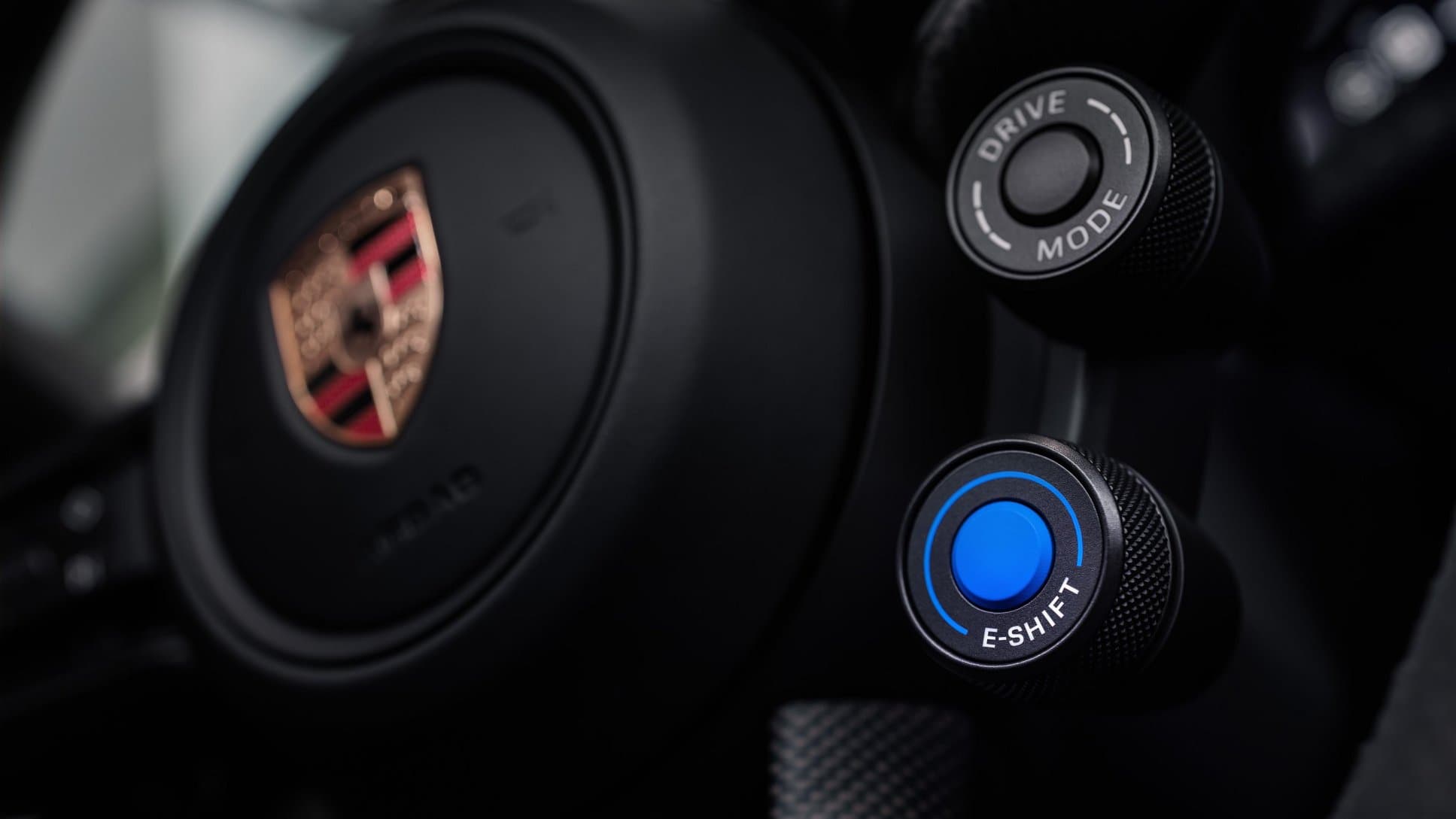
E-Shift is switched on via a dedicated mode dial on the Taycan's GT-sports steering wheel — the blue "E-Shift" knob visible next to the drive-mode selector. Once active, the paddles behind the wheel trigger manual gear changes, or the system can be left in automatic mode to shift on its own. Turn E-Shift off, and those same paddles switch jobs entirely: they control regenerative braking strength across two levels instead. Pulling both paddles at once, regardless of mode, triggers Porsche's Push-to-Pass function for a temporary performance boost.
What E-Shift doesn't change
- Overall acceleration and performance stay identical to driving without it — torque is briefly cut and restored during each shift, not reduced overall
- It's an option, not standard equipment — it requires selecting the "E-Shift including GT-sports steering wheel with paddles" package
- Porsche isn't the first to do this — Hyundai's Ioniq 5 N uses a broadly similar simulated-gear concept on a single-speed drivetrain
E-Shift arrives alongside a broader round of Model Year 2027 Taycan updates: a bump to 434 miles of maximum WLTP range via a new low-rolling-resistance summer tire option, a redesigned Porsche Digital Interaction infotainment suite with quick-access widgets, and a factory-orderable Manthey Kit for the Taycan Turbo GT with Weissach Package — the same aero, chassis, and powertrain package that helped set a 6:55.533 Nürburgring lap time earlier this year.
The bottom line: E-Shift won't make the Taycan any faster, and Porsche isn't pretending otherwise. What it does is give drivers a reason to actively engage with the car's power delivery instead of just mashing the pedal — and by anchoring the virtual shifts to the Taycan's one real mechanical gear change, Porsche built something more considered than a simple sound-and-vibration gimmick.