Forum Mobility Opens Megawatt Truck Chargers at Port of Long Beach: 2 MCS Units for Tesla Semi, 30 MW More Coming
Forum Mobility switched on 2 MCS megawatt chargers at its FM Harbor depot at the Port of Long Beach, adding 60% of a Tesla Semi's range in 30 minutes. What trucks can use them, cost and what's next.
Photo: Forum Mobility
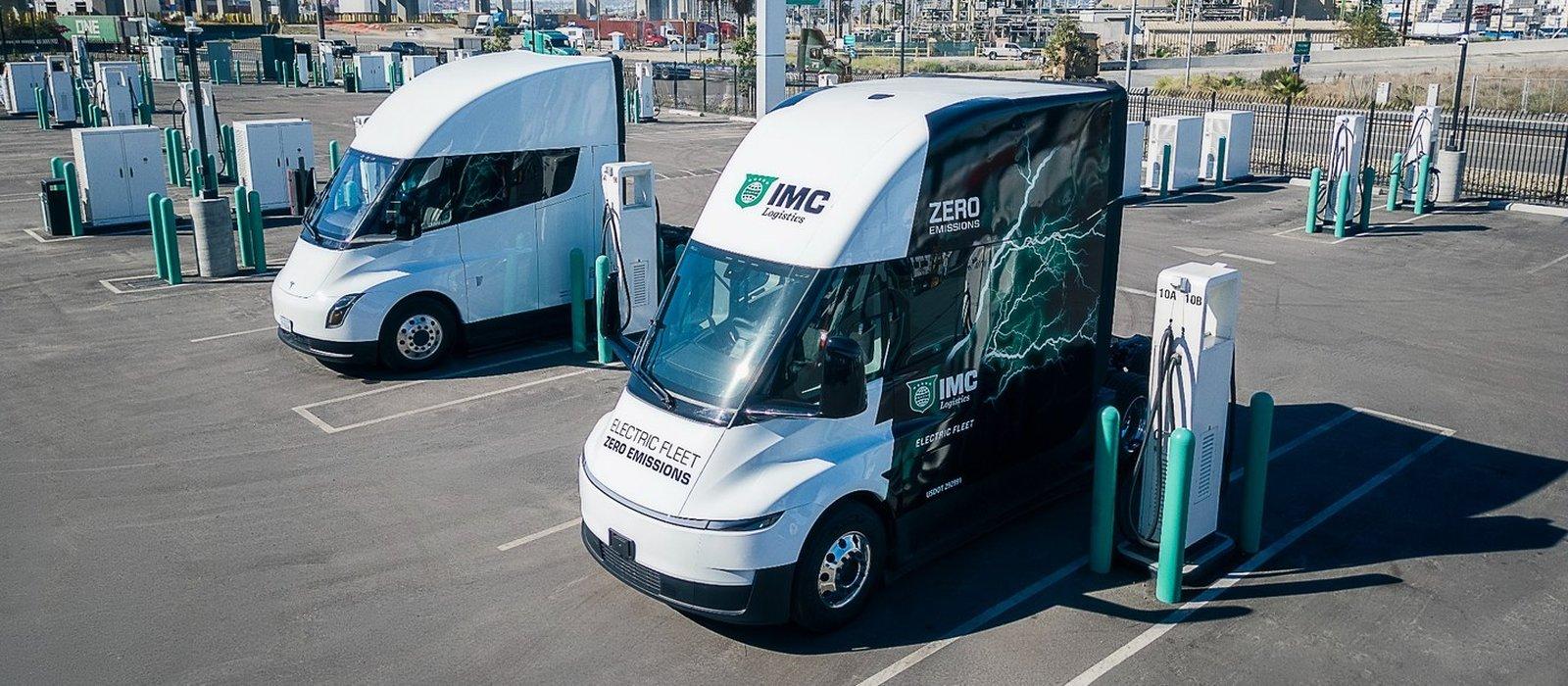
Electric big rigs leaving the Port of Long Beach can now charge at megawatt speed. Forum Mobility has switched on two Megawatt Charging System (MCS) chargers at FM Harbor, its truck charging depot in the port's gateway, and the first trucks to plug in were production Tesla Semis run by IMC Logistics.
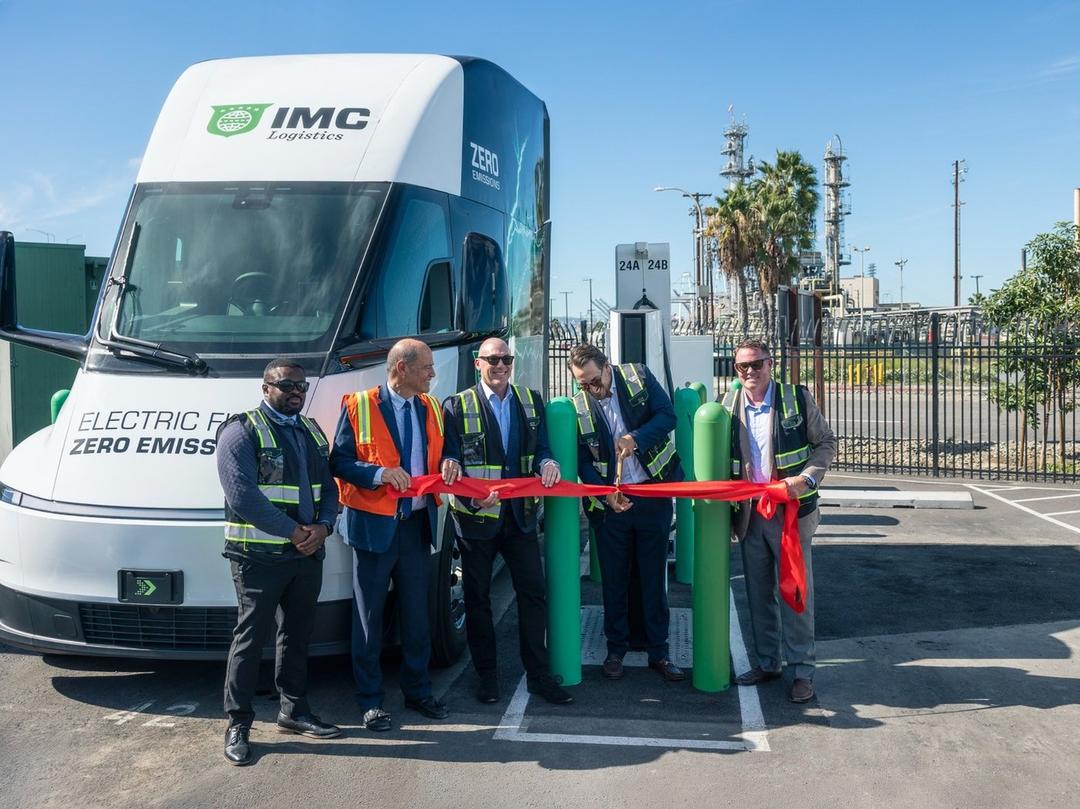
The ribbon was cut on November 5, and Forum announced the chargers this week. It is a small start, just two plugs, but Forum says they are the first of about 30 megawatts of MCS charging it is bringing online in California over the coming months.
2
New MCS chargers at FM Harbor
44
Existing CCS ports on the site
60%
Tesla Semi range added in about 30 minutes
330+
Tesla Semis reserved by Forum customers
Where Is FM Harbor, and What Changed?
FM Harbor sits on just under two acres of a former diesel fueling site in Long Beach, next to a freight rail line and an on-ramp to the Long Beach International Gateway Bridge. It opened in December 2024 and held its official ribbon-cutting in January 2025, when it was billed as the largest port-based truck charging depot in the country.
Until now, every plug on the site used CCS, the same connector family found on most non-Tesla passenger EVs. According to the South Coast Air Quality Management District, the depot has 19 dual-port and 6 single-port chargers rated at 360 kW each. That adds up to 44 trucks charging at once and about 9 MW of total capacity. A full charge on those units takes around 90 minutes, depending on the truck.
The two new MCS chargers are a different class of hardware. Forum calls them v4 MCS chargers, and Electrek reported in September that Forum was adding two Tesla MCS Megachargers at FM Harbor. Forum says they can put back up to 60% of a Tesla Semi's range in about 30 minutes, roughly a third of the time the CCS units need for a big recharge.
Forum Mobility and IMC Logistics cut the ribbon on the new MCS chargers at FM Harbor on November 5. Photo: Forum Mobility
Which Trucks Can Use the MCS Chargers?
Forum markets the new chargers as Tesla Semi compatible, and the Semi is the truck they were opened with. But they are not Tesla-only by design. Electrek reports that Tesla's Megacharger hardware runs on the open MCS 3.2 standard, so it can also charge MCS-equipped trucks from Daimler, Volvo and Scania.
Most electric drayage trucks on the road today, such as the Freightliner eCascadia and Volvo VNR Electric, use CCS. Those trucks can keep using FM Harbor's 44 CCS ports, which is where Amazon's Volvo VNR Electrics have been charging since the site opened.
MCS vs. Tesla's Charging, Simply Explained
Think of MCS as the heavy-truck version of the plug standards on passenger cars. It was developed by the industry group CharIN, with Tesla among the companies that pitched early designs, and is published in North America as SAE J3271. It is built for up to 3.75 MW in theory (3,000 amps at 1,250 volts). Tesla's current Megachargers follow MCS. So unlike the car world, where Tesla's NACS plug and CCS battled for years, big trucks are heading toward one shared plug. The Semi charges at up to 1.2 MW today.
Advertisement
How Much Does It Cost to Charge?
Forum has not published per-kWh rates for FM Harbor. Its pitch is about total fuel cost. "We can fuel with electrons 40% cheaper than diesel," CEO and co-founder Matt LeDucq said. Forum has not said what diesel price or truck efficiency that figure assumes.
Forum sells depot access through contracts with trucking companies, not pay-as-you-go stops. It says 25 carriers now have contracted capacity across its network. For context, Electrek reported in September that Tesla sells its Megacharger for $188,000 and takes $0.08 per kWh on charging sites run by third parties.
On funding, Forum's announcement does not list grants for the new MCS units. The original FM Harbor depot came out of a partnership started by the Mobile Source Air Pollution Reduction Review Committee (MSRC) with the Ports of Los Angeles and Long Beach, and Electrek reports Forum's new California depots were funded in part by state and regional grants.
Forum's Next Depots, and Where Tesla Fits
FM Harbor is the first piece of a bigger build. In September, Forum broke ground on four more California depots with 30 MW of charging, all using pull-through lanes so drivers don't have to unhook trailers:
Depot
Location
Status
FM Harbor
Port of Long Beach
Open: 44 CCS ports plus 2 new MCS chargers
FM Santa Fe
Rancho Dominguez, CA
Under construction; open to all drayage fleets
FM Francis
Ontario, CA
Under construction; public Tesla Megacharger site
FM Adeline
Oakland, CA
Under construction; public Tesla Megacharger site
FM Coliseum
Oakland, CA
Under construction; public Tesla Megacharger site
Sources: Forum Mobility, Electrek, Trucking Dive.
Tesla will operate public Megachargers at three of those depots, though it does not own the sites. After that, Forum plans depots in the Inland Empire, the Central Valley, Las Vegas, Phoenix, Houston, Dallas, Seattle/Tacoma and Chicago.
That makes Forum an important partner for Tesla's own network, which is growing slowly. As we reported when Tesla opened its first Texas Megacharger in Mesquite, Tesla's map listed just seven public Megacharger sites with 44 stalls, well short of the roughly 37 sites it planned for 2026. Forum's existing customers already hold reservations for more than 330 Semis.
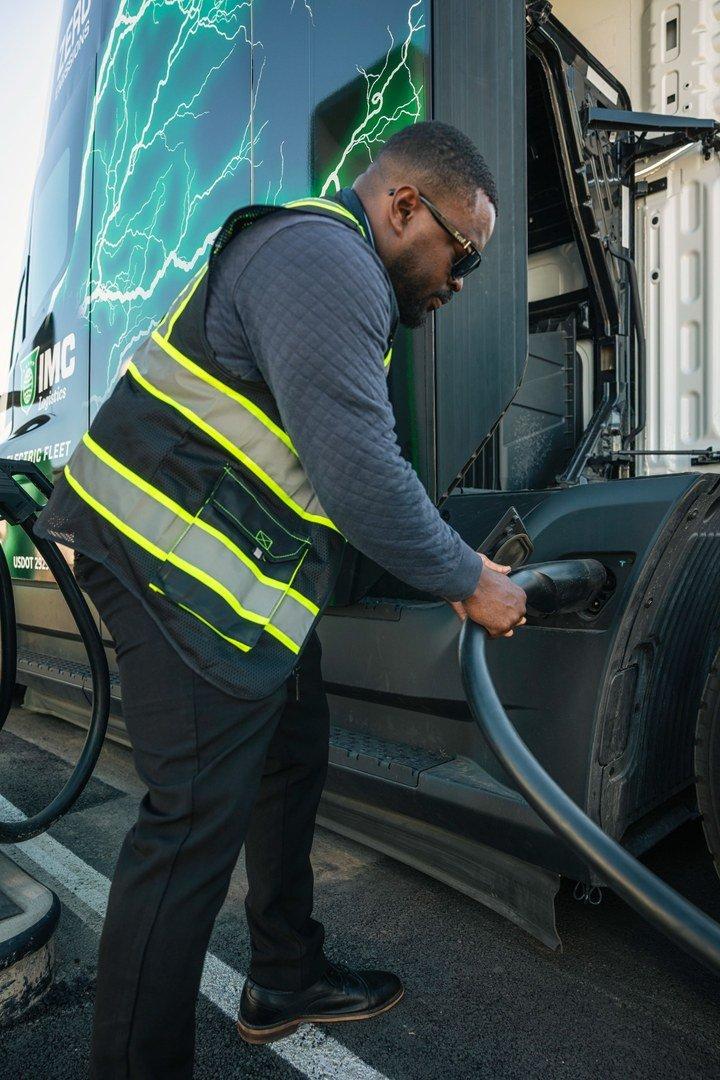
An IMC Logistics driver plugs an MCS cable into a Tesla Semi at FM Harbor. Photo: Forum Mobility
Advertisement
Do California's Drayage Rules Still Require Electric Trucks?
No, not at the state level. California's Advanced Clean Fleets rule once required drayage fleets serving ports to go zero-emission. After the state withdrew its request for a federal waiver and settled a lawsuit in 2025, the California Air Resources Board voted to repeal the drayage and high-priority fleet parts of the rule. Those repeals took effect on September 10, 2026. Only the rules for state and local government fleets remain.
Separately, Congress voted in 2025 to revoke California's federal waiver for its Advanced Clean Trucks sales rule, a move California is fighting in court.
The ports have kept their own goals. Under their Clean Air Action Plan, the Ports of Los Angeles and Long Beach still target a fully zero-emission drayage fleet by 2035. Their Clean Truck Fund rate charges $10 per loaded 20-foot container unit moved by a conventional truck, and zero-emission trucks are permanently exempt. That fee, plus fuel savings, is now the main business case for electric drayage at the ports.
Keep in Mind
Two MCS chargers can serve only a few trucks at a time. Forum has not released kW ratings for the new units, rates for carriers, or whether non-contract trucks can drop in at FM Harbor. Tesla's public Megacharger depots in Ontario and Oakland are still under construction.
What It Means for US Fleets
For trucking companies in Southern California, this is the first time megawatt charging sits right at the gateway to the nation's second-busiest container port. A Semi that tops up 60% in a half-hour can do port runs plus a longer inland haul in one shift, instead of sitting on a CCS charger for 90 minutes.
For the wider market, the bigger story is the plug. With Tesla's Megachargers following MCS, depots like Forum's can serve more than one truck brand as Daimler, Volvo and others ship MCS-equipped models. And with state mandates gone, private projects like this one will decide how fast port trucking goes electric.
"Long range electric trucks and ultra-fast charging is the next step in zero emission freight." — Jim Gillis, President, Pacific Division, IMC Logistics
The bottom line: Forum Mobility's two new MCS chargers bring megawatt charging to the Port of Long Beach for the first time, with Tesla Semis first in line. It is a small start, but 30 MW more is under construction in Rancho Dominguez, Ontario and Oakland, and Tesla will run public Megachargers at three of those sites.